
Owning a slice of paradise in Harbor Springs or a lakeside retreat in Boyne City should feel like a dream, but the reality of local compliance often feels like a maze. Understanding the legal requirements for short term rentals in michigan is no longer just about paying your dues; it’s about protecting your investment against a shifting tide of over 1,700 local ordinances. You’ve likely felt the weight of uncertainty, wondering if a sudden HOA vote or a new zoning tweak in Traverse City might quiet your guest arrivals for good. It’s a valid concern for any property owner who values the peace of mind that comes with a perfectly managed estate.
We understand that you’d rather focus on the hospitality and the high-end experience your guests enjoy than on the fine print of tax codes and permit renewals. This 2026 guide is designed to clear the fog, offering you a definitive path to compliance that honors the unique character of communities like Petoskey and East Jordan. You’ll gain a clear checklist for legal operation, a breakdown of the current 6% state use tax, and expert insights into local zoning permits. We’re here to ensure your Northern Michigan investment remains as rewarding as a summer afternoon on Walloon Lake.
Key Takeaways
- Master the foundational 6% Michigan Use Tax and stay ahead of the 2026 legislative shifts to keep your lakeside investment financially sound.
- Navigate the legal requirements for short term rentals in michigan by securing the correct municipal permits in cities like Traverse City and Harbor Springs before you open your doors to guests.
- Ensure your property meets the latest Michigan Residential Code safety standards, including mandatory equipment like carbon monoxide alarms and fire extinguishers, to provide a secure and pampered experience.
- Protect your investment from sudden private bans by understanding how HOA “Commercial Use” clauses can override local zoning in exclusive Northern Michigan neighborhoods.
- Simplify complex compliance and meet 24/7 local agent requirements by partnering with professional property management experts who handle the logistics for you.
Statewide Michigan STR Regulations and Tax Obligations
The shimmering waters of Lake Charlevoix and the vibrant streets of Traverse City draw thousands of visitors every year, creating a thriving market for property owners. While the allure of hosting is undeniable, the legal requirements for short term rentals in michigan start at the state level in Lansing. Every owner must register their property with the Michigan Department of Treasury to ensure they’re recognized as a legitimate business entity. This registration isn’t just a formality; it’s the gateway to staying compliant with the state’s evolving financial expectations.
Understanding the distinction between state mandates and local authority is crucial for your peace of mind. While your local officials in Harbor Springs or Boyne City oversee zoning and permits, the state focuses on revenue and broad safety standards. Many owners find that Short-term rental regulations can feel like a moving target, especially as Michigan seeks to balance the needs of permanent residents with the economic benefits of tourism. Staying informed about these statewide obligations is the first step in protecting your investment.
To better understand this concept, watch this helpful video:
The 6% Use Tax: Who Pays and How?
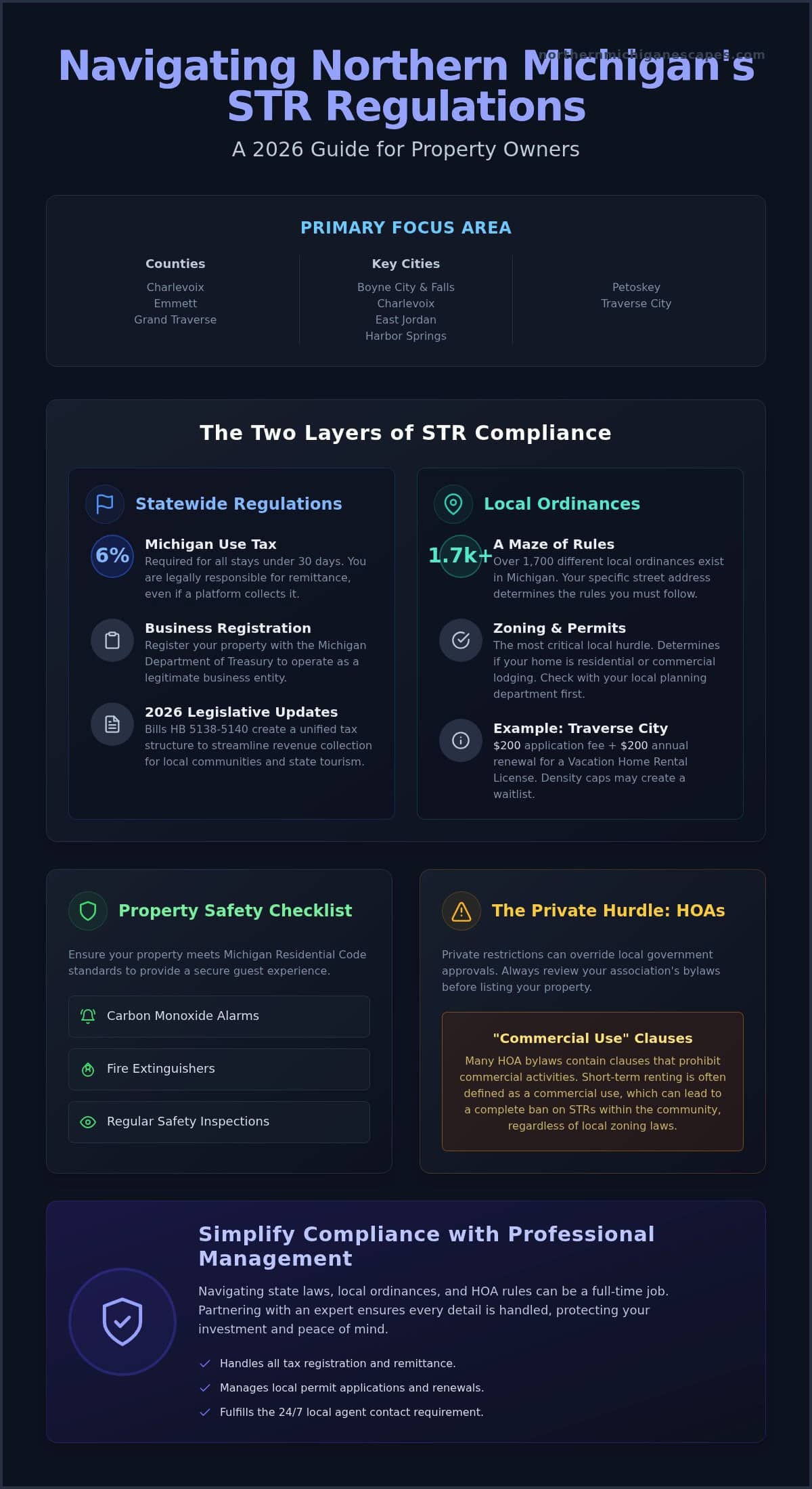
The 6% Michigan Use Tax remains a foundational requirement for any stay lasting less than 30 days. In 2026, the definition of accommodations is broad, encompassing everything from luxury condos in Petoskey to cozy cabins near Boyne Falls. While major marketplace facilitators often collect and remit this tax on your behalf, the legal responsibility for accuracy still rests with you. You must maintain meticulous records for state audits, ensuring every guest stay is documented. If you book directly through your own website, you’ll need to handle this remittance yourself through the Treasury’s online portal. To drive traffic to that direct booking site, you can find out more about Digital Advertising and Sponsored Content Fees and explore how regional media can boost your visibility.
2026 Legislative Updates: HB 5138-5140 Explained
The legislative landscape shifted significantly with the 2025-2026 package known as HB 5138, 5139, and 5140. These bills introduced a unified tax structure designed to streamline how revenue flows from your rental to the community. A portion of this revenue is now directed into local general funds, helping municipalities like East Jordan maintain the infrastructure that guests rely on. Additionally, the 8% state-level funding allocation for the Pure Michigan campaign ensures our region remains a premier global destination. This unified structure simplifies your annual tax filings by consolidating various local assessments into a single, predictable framework. For owners who find these logistics daunting, professional property services can provide the meticulous oversight needed to ensure every deadline is met without stress.
Navigating Local Zoning and Permits in Northern Michigan
The charm of Northern Michigan enclaves like Harbor Springs and Petoskey is preserved through meticulous local oversight. While you’ve already accounted for the Statewide use tax on STRs, the most significant legal requirements for short term rentals in michigan are determined by your specific street address. Local zoning is the critical hurdle because it dictates whether your property is viewed as a quiet residential home or a commercial lodging venture. In Traverse City, for instance, unhosted rentals are generally restricted in residential zones, requiring owners to navigate a specific Vacation Home Rental License process that includes a $200 application fee and a $200 annual renewal fee.
Grand Traverse County has seen a rise in density limits and STR caps to maintain neighborhood character. This means even if you have a stunning property, you might face a waitlist if the local quota is met. Identifying your property’s specific zoning classification is the first step before you ever list a home. A quick call to the planning department in Boyne City or a review of the Petoskey city charter can save you from costly non-compliance fines. These rules ensure that the quiet reassurance of our local neighborhoods remains intact for everyone.
Charlevoix and Emmet County Local Ordinances
In communities like Boyne Falls and East Jordan, the zoning administrator is your primary guide. Charlevoix requires an annual renewal cycle for permits, often distinguishing between owner-occupied homestay rentals and dedicated investment properties. Fees vary by municipality, but the investment in a proper permit ensures your right to operate is protected. If you’re looking to acquire a new property, our team specializing in Real Estate Sales and Acquisitions can help you identify parcels with the most favorable zoning for your goals.
Permit Application Checklists
When you’re ready to apply, you’ll need more than just a signed form. Most municipalities in Northern Michigan, including Petoskey and Traverse City, require detailed floor plans and clear parking maps to ensure guest safety and neighborhood harmony. Perhaps the most vital requirement is the Local Agent mandate. You must provide a contact person who lives within a specific radius and can respond to guest issues or municipal concerns 24/7. This ensures that the high standards of our local hospitality are maintained, even when you’re miles away from the lakefront. Processing timelines can vary, so it’s wise to start your application well before the busy summer or ski seasons begin.
Essential Safety Standards and Building Code Compliance
Ensuring your vacation home is a sanctuary of safety is as important as the view from the deck. When you welcome guests to the shores of Lake Charlevoix or the slopes of Boyne Mountain, you’re promising more than a bed; you’re promising a secure environment. Meeting the legal requirements for short term rentals in michigan involves strict adherence to the Michigan Residential Code (MRC). These standards ensure that every structure, from a historic cottage in Harbor Springs to a modern condo in Traverse City, is fit for short-term occupants. It’s about blending the emotional allure of a getaway with the quiet reassurance of a safe stay.
Compliance begins with the essentials. You’ll need interconnected smoke detectors on every level and inside every sleeping room. Carbon monoxide alarms are mandatory near all sleeping areas, especially if your property features fuel-burning appliances or an attached garage. A fire extinguisher with a minimum 2-A:10-B:C rating must be visible and accessible, typically mounted in the kitchen area. These aren’t just suggestions. They’re the bedrock of your municipal inspection, which is a required step for maintaining your STR license in cities like Petoskey and East Jordan. Inspectors also look for proper egress windows in every bedroom to ensure guests have a clear exit path in an emergency.
Occupancy Limits and Parking Regulations
Calculating your property’s maximum occupancy is a precise science under local law. Most Northern Michigan municipalities follow the standard of two persons per bedroom plus an additional two guests for the entire dwelling. For example, a three-bedroom home in Boyne City would likely be capped at eight occupants. Exceeding these limits can lead to significant fines and strained relationships with neighbors. Parking is equally scrutinized. In Harbor Springs and Petoskey, you’re often required to provide off-street parking spaces that correspond to your guest count. Managing the “nuisance” factor through clear noise ordinances and strict trash management schedules keeps your property in good standing with the local planning commission.
Professional Maintenance as Compliance
Maintaining these standards between every guest stay is a logistical challenge that requires meticulousness. Professional housekeeping does more than just fluff pillows; it serves as a frontline safety check. Cleaners verify that smoke detector batteries are functioning and that egress windows remain unobstructed. Documenting these regular checks is a vital part of the legal requirements for short term rentals in michigan, as it helps mitigate liability risks should an incident occur. To ensure your home meets these commercial-grade standards, you might Learn about our professional property services. We take pride in the small details, ensuring your retreat remains a source of joy rather than a compliance burden.
HOA Bylaws and Private Property Restrictions
While municipal permits in Traverse City or Petoskey are essential, they aren’t the final word on your property rights. In many Northern Michigan enclaves, Homeowners Association (HOA) bylaws often supersede municipal zoning. This layer of private governance can be more restrictive than city hall, making it a pivotal piece of the legal requirements for short term rentals in michigan. If your association’s master deed contains a “Commercial Use” clause, you may find yourself in a legal grey area. Michigan courts have frequently interpreted short-term stays as business activities rather than residential ones, allowing HOAs to ban them even if the local township remains supportive.
Many owners believe in the myth of “grandfathering,” assuming that if they rented their Harbor Springs cottage before a ban was enacted, they’re protected. This is rarely the case. HOA boards have the authority to amend bylaws at any time with a sufficient vote, and these changes typically apply to everyone, regardless of prior use. Before you invest in a new lakeside retreat, you must meticulously review the association’s documents for red-flag phrases like “minimum 30-day lease” or “single-family residential use only.” Identifying these restrictions early is the only way to ensure your investment remains viable in the long term.
Reviewing Master Deeds and Bylaws
In communities like Boyne Falls, understanding the nuance of association documents is the difference between a successful venture and a costly legal battle. Look for restrictive language in the master deed that limits leasing or requires board approval for guests. If you’re eyeing a condo near the slopes, you can Explore Boyne Mountain vacation rentals within managed communities that have already established clear, supportive frameworks for hosting. Amending these bylaws is a complex process requiring a supermajority, so it’s best to buy where the rules already align with your financial goals.
Neighbor Relations and Community Standing
The “commercial feel” of a high-turnover rental is often what triggers neighbor complaints and subsequent HOA bans. In tight-knit areas like East Jordan or Charlevoix, maintaining a quiet, respectful presence is vital for your community standing. Professional management acts as a crucial buffer, ensuring guests adhere to parking and noise rules before a neighbor feels the need to call the board. While some fear STRs lower property values, a well-managed rental in 2026 often does the opposite by funding high-end renovations and professional upkeep. To ensure your property remains a welcome part of the community and meets all legal requirements for short term rentals in michigan, consider our full-service property management to handle the delicate balance of neighbor relations.
How Professional Management Simplifies Legal Compliance
The transition from a personal retreat to a high-performing investment requires a shift in mindset from casual hosting to professional operations. As we’ve explored, the legal requirements for short term rentals in michigan are a complex tapestry of state taxes, municipal permits, and private association rules. Attempting to manage these layers alone often leads to the very friction that triggers local bans or heavy fines. Professional management transforms these regulatory hurdles into a seamless background process, allowing you to enjoy the rewards of ownership without the administrative weight. It provides the quiet reassurance that your property is always in good standing with the authorities in Traverse City or Boyne City.
One of the most immediate benefits is the automation of financial obligations. We handle the meticulous collection and remittance of the 6% Michigan Use Tax and any local lodging assessments, ensuring your records are audit-ready and compliant with the 2026 unified tax structures. Beyond the ledger, we fulfill the critical “Local Agent” requirement mandated by many Northern Michigan municipalities. Whether it’s a midnight noise concern in Harbor Springs or a surprise building inspection in Petoskey, our team serves as the 24/7 point of contact. This local presence isn’t just a convenience; it’s a legal necessity that protects your permit and maintains the harmony of the neighborhood.
The Northern Michigan Escapes Advantage
With a 20-year history of navigating the unique landscape of Charlevoix and Emmet counties, we offer a level of expertise that goes beyond simple property care. We manage the entire licensing and permit renewal cycle, tracking the specific deadlines for every township from East Jordan to Boyne Falls. Our specialized real estate brokerage status allows us to provide strategic advice before you even make a purchase, helping you identify properties in “safe” zones where STRs are welcomed and protected. If you’re currently weighing your options, you might ask: Is a Northern Michigan vacation rental a good investment? Our deep local roots provide the data-driven answers you need to invest with confidence.
Protecting Your Investment in 2026
The regulatory environment will continue to shift as Michigan balances its $54 billion tourism industry with the needs of local enclaves. We stay ahead of these legislative ripples through active local advocacy and a meticulous focus on commercial-grade safety standards. Every turnover is an opportunity to verify that your home meets the Michigan Residential Code, from testing CO alarms to ensuring fire extinguishers are fully charged. This proactive approach maximizes your ROI by preventing costly downtime and ensuring 100% legal compliance year-round. To ensure your lakeside retreat or mountain condo is fully protected, Contact us for a compliance audit of your property and discover the peace of mind that comes with professional oversight.
Protecting Your Northern Michigan Legacy
Owning a retreat in the heart of Northern Michigan is about more than just square footage; it’s about the memories made on the water and the peace that comes with a sound investment. We’ve explored the intricate 2026 landscape, from the 6% statewide tax to the hyper-local zoning permits required in Traverse City and Harbor Springs. Mastering the legal requirements for short term rentals in michigan is the first step toward a thriving venture, but you don’t have to walk this path alone. The complexity of local ordinances shouldn’t dim the excitement of your lakeside getaway.
Our expert local team in Boyne, Charlevoix, and Petoskey brings the quiet reassurance of a licensed real estate brokerage to every property we represent. With over 250 properties currently under our care, we’ve refined the meticulous details of compliance and safety so you can focus on the emotional allure of the region. Whether you’re navigating HOA hurdles or seeking a commercial-grade safety audit, we’re here to serve as your definitive regional expert. We take pride in the small details, ensuring your home remains a source of joy rather than a compliance burden.
Secure Your Investment with Professional Property Management and ensure your home remains a sanctuary of luxury and reliability for years to come. Your Northern Michigan dream deserves nothing less than perfection.
Frequently Asked Questions
Do I need a business license to run an STR in Michigan?
You don’t need a statewide business license to operate, but you must register your property with the Michigan Department of Treasury. Most local municipalities, including Harbor Springs and Petoskey, require their own specific short-term rental permits. These local rules are the primary way cities manage density and safety in our beautiful Northern Michigan neighborhoods. Always verify your local township requirements before you begin welcoming guests to your retreat.
What is the 6% Use Tax and how do I pay it?
The 6% Use Tax is a mandatory statewide levy on any rental stay lasting less than 30 days. You remit this through the Michigan Department of Treasury, though marketplace facilitators often collect it on your behalf. It’s essential to maintain separate records for state audits to ensure every guest stay is accounted for and every dollar is correctly allocated. This ensures your investment remains transparent and financially sound under state law.
Can my HOA legally ban short-term rentals if I’m already renting?
Your HOA can legally ban short-term rentals at any time by amending their bylaws with a sufficient membership vote. Michigan courts generally interpret short-term stays as commercial activities, which means they often fall outside the protections of residential zoning. Existing rentals aren’t automatically protected by grandfathering, so staying in good standing with your board is vital for your long-term success. Always review association documents meticulously before acquiring a new property.
Are there specific parking requirements for STRs in Traverse City?
Traverse City mandates that all short-term rentals provide dedicated off-street parking spaces to prevent guest vehicles from crowding residential neighborhoods. The number of required spots is usually tied to your property’s maximum occupancy limit. Providing clear instructions and ample space ensures your guests feel pampered while respecting the quiet peace of your local Traverse City neighbors. It’s a small detail that maintains the high standards of our local hospitality.
What safety equipment is mandatory for a Michigan vacation rental?
Mandatory safety equipment includes interconnected smoke detectors on every level and carbon monoxide alarms near all sleeping quarters. You must also have a fire extinguisher with a minimum 2-A:10-B:C rating visible in the kitchen area. These items are foundational to the legal requirements for short term rentals in michigan and are verified during your initial municipal building code inspection. Meeting these standards provides the quiet reassurance that your guests are always protected.
How often do I need to renew my local STR permit?
You typically need to renew your local short-term rental permit every year in municipalities like Charlevoix and Traverse City. This annual cycle ensures that all properties continue to meet safety and zoning standards as local ordinances evolve. We recommend starting your renewal process at least 60 days before your current permit expires to avoid any disruptions during the peak vacation seasons. Staying ahead of these deadlines is key to maintaining a reliable investment.
Does Pure Michigan funding affect my local property taxes?
Pure Michigan funding is supported through a portion of the tax revenue generated by your rental, but it doesn’t directly raise your local property taxes. Under the 2026 unified tax structure, 8% of state-level funding is allocated to tourism campaigns that keep our region vibrant. This system ensures that the beauty of our landscape is shared with the world while supporting local services. It’s a balanced approach that benefits both property owners and the community.
What happens if I operate an STR without a permit in Boyne City?
Operating without a permit in Boyne City puts you at risk for substantial daily fines and the potential for a permanent cease-and-desist order. Local administrators use automated tracking to identify unpermitted listings on major booking platforms. Ensuring you meet all legal requirements for short term rentals in michigan before welcoming your first guest is the only way to protect your financial performance and peace of mind. Compliance is the bedrock of a successful Northern Michigan investment.