
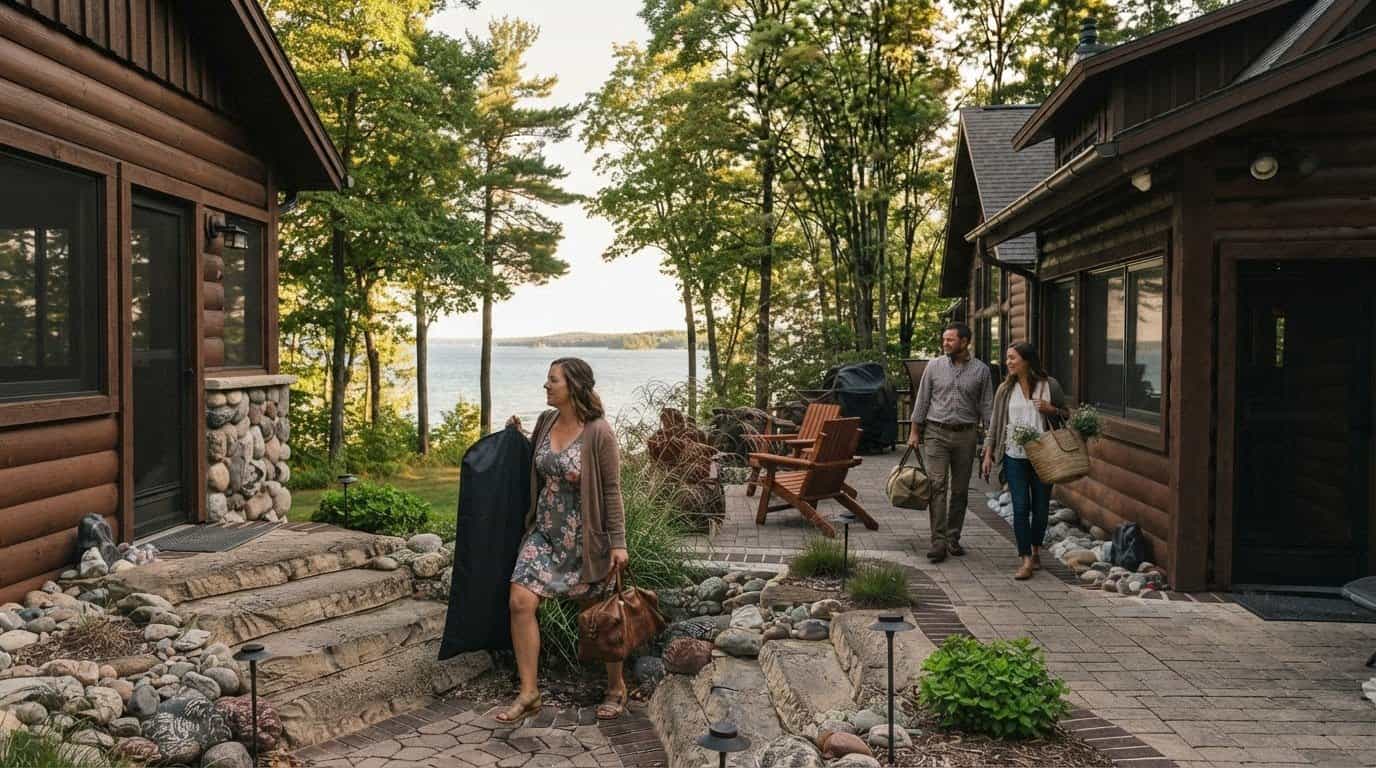
Guests who reserve their own cabin generally pay for their stay. A room block does not automatically make the couple responsible for every booking. The agreement sets the terms: with a courtesy block, guests book and pay individually; with a contracted block, the couple may be responsible for rooms that go unbooked. That distinction matters when booking a block of cabins for a wedding party.
It’s natural to want loved ones nearby while making sure everyone understands the cost. A clear plan helps guests choose a cabin, know what they’ll pay, and book before the block deadline.
Here, you’ll learn how to estimate the number of cabins based on who’s traveling and sharing, who pays under different block arrangements, and how to explain booking details to guests. You’ll also learn what to consider about deadlines and room pickup, helping the celebration feel welcoming and organized from arrival to farewell.
Key Takeaways
- Guests who reserve their own cabins usually pay for their lodging; the agreement determines whether the couple could owe for unbooked rooms.
- Estimate cabin needs by considering how many guests are traveling, who will share, and where guests prefer to stay.
- Compare courtesy and contracted blocks carefully, especially their room-release dates and any pickup requirements.
- Share the booking details and cutoff date clearly, then track reservations so guests have time to book within the block.
Estimating the number of rooms needed
Booking a block of cabins for a wedding party starts with the guest list, not the full headcount. Separate town guests from out-of-town guests, then estimate how many will need lodging. Couples sharing usually reserve one room together, so count rooms rather than individual travelers. A wedding planner can help estimate demand from the wedding date, travel distance, and guests’ lodging preferences.
Use the travel share as a starting point, then adjust for shared cabins and guests who may stay elsewhere. For a 150-person wedding with 80 out-of-town guests, one example suggests 25 to 30 rooms across the weekend. A typical wedding hotel block contains 10 to 30 rooms, though cabin capacity and group needs differ. For a local wedding with 50 guests, suggested courtesy blocks range from 15-30 rooms; for a destination wedding with 50 guests, the range is 20-40 rooms.
Treat these examples as a starting point, not a fixed formula. A summer weekend in Charlevoix may bring more out-of-town guests than a local celebration, while a larger cabin may accommodate a family that would otherwise need separate rooms. Post lodging details and the booking deadline on the wedding website so guests can respond early and you can refine the number of rooms.
For a group booking through a platform, share its booking link or code and explain how guests reserve individually. A group rate may make the shared option more appealing, but don’t reserve several rooms under your own name unless you’re prepared to manage cancellations and possible payment responsibility. A courtesy block can limit your financial exposure because you’re not responsible for rooms guests don’t book. A contracted block may leave you responsible for unbooked rooms.
Check that each cabin’s sleeping arrangements suit the guests assigned to it. Consider whether the property has useful gathering space, parking, and the amenities your group needs. For guests with mobility needs, review access routes, entrances, bathrooms, and sleeping arrangements before assigning cabins. These details help you match each reservation to the right guests.
Room-block agreements and cut-off dates
A room-block agreement sets out booking terms, the release date, and any responsibility for unclaimed rooms. Read it carefully before sharing booking details for the wedding weekend.
Managing Reservations and Charges
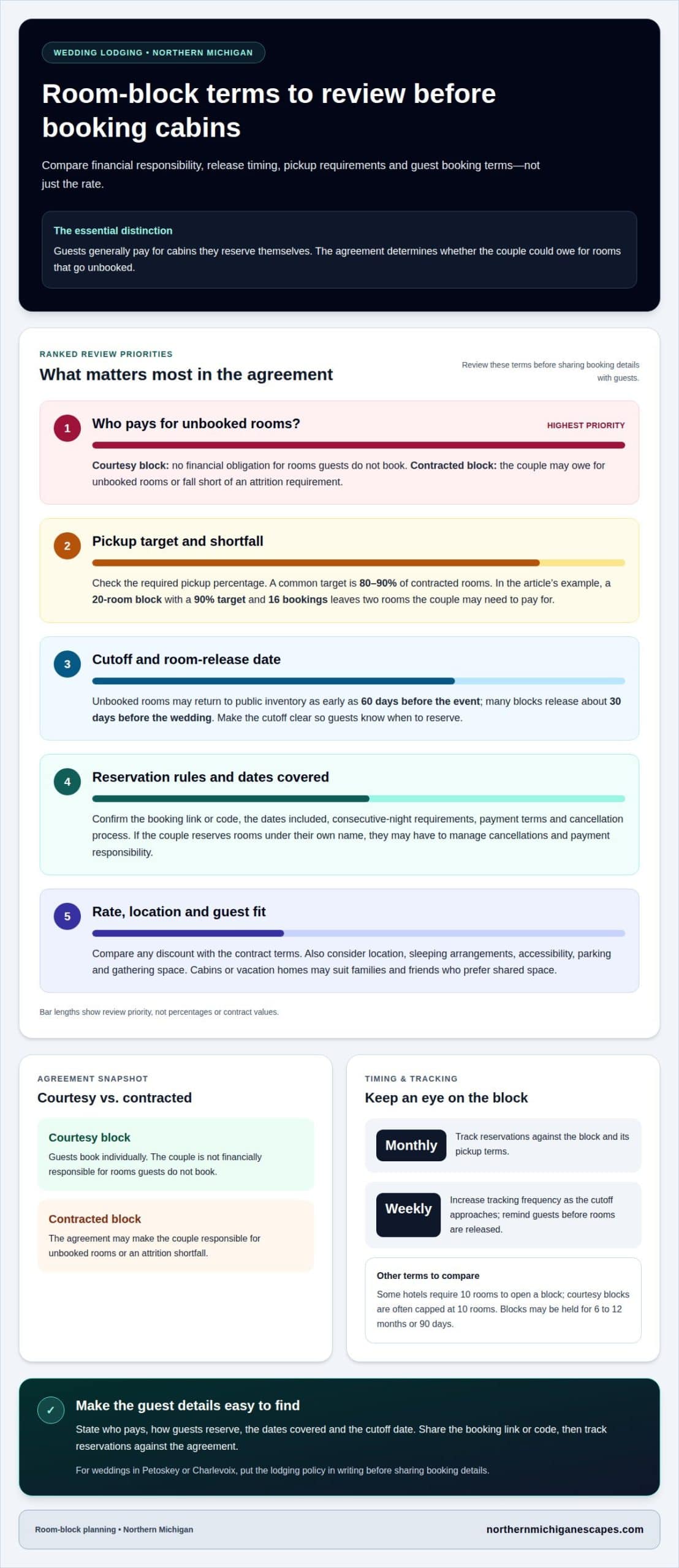
Reservation management means tracking guest bookings against the block’s cutoff and payment terms. It matters because a courtesy block and a contracted block can leave the couple with different financial responsibilities. Hotels may release unbooked rooms as early as 60 days before the event, while many blocks are released about 30 days before the wedding. Track pickup monthly, then weekly as the deadline approaches.
Give guests the personalized booking link or code, the dates covered, and the cutoff. Remind them to reserve before rooms return to public inventory. Read the agreement for the required pickup: a contracted block may make the couple responsible for unbooked rooms or an attrition percentage. A common target is 80-90% of contracted rooms.
Room-Block Benefits and Drawbacks
A room block gathers lodging options under shared terms, but its benefits depend on the agreement. Guests may receive a slight discount, and the couple can keep wedding-party stays near one another. A courtesy block has no financial obligation for rooms guests don’t book. A contracted block may create a bill if reservations fall short of its attrition requirement.
Some hotels require 10 rooms to open a block, and courtesy blocks are often capped at 10 rooms. Hotels may hold blocks for 6 to 12 months or 90 days. Compare the release date, consecutive-night requirements, and pickup clause before deciding which arrangement suits your group.
Comparing Lodging and Group Rates
Cabins, hotels, and vacation homes differ in layout and booking structure. A hotel block keeps individual guest reservations at one property; cabins or vacation homes may suit families and friends who prefer shared space. Compare location, sleeping arrangements, accessibility, and how easily guests can coordinate their arrival for the wedding weekend.
Cabin resorts may offer group rates or wedding lodging discounts, but terms vary. Hotel blocks may also include a discount, and couples may be able to negotiate rates or amenities based on the rooms they guarantee. Review the rate, cutoff date, and attrition terms together so a lower rate doesn’t obscure responsibility for unbooked rooms.
Clarifying who pays for wedding-party lodging
Guests who reserve their own hotel room generally pay for their lodging. A room block groups booking options; it doesn’t automatically mean the couple covers every guest’s stay. The agreement sets financial responsibility, especially if rooms remain unbooked. For a wedding in Petoskey or Charlevoix, state plainly whether guests book and pay individually or the couple is covering their lodging.
Separate guest payments from any rooms the couple chooses to cover. For example, the couple might pay for the wedding party’s cabins while guests handle their own reservations. If you reserve multiple rooms under your name, you may be responsible for payment if guests don’t show, as well as for canceling each booking. Put the payer’s name, cancellation process, and reservation instructions in writing before sharing booking details.
The block type matters. In a courtesy block, the couple has no financial obligation for rooms guests don’t book. A contracted block can require payment for unbooked rooms or an attrition percentage. For example, with a 20-room block and a 90% target, 16 bookings leave two rooms the couple may need to pay for. That exposure makes the contract’s pickup terms more important than a negotiated rate alone.
Make the policy easy to find on the wedding website: say who pays, explain how guests reserve, and give the cutoff date. Guests should know whether their travel dates include the night before or after the wedding. Clear information also helps coordinate transportation between cabins and the venue, especially when the wedding party needs to arrive early.
If the couple is covering lodging, specify which wedding-party members and nights are included. Keep those reservations separate from guest bookings, and send confirmation details directly to each recipient. If guests pay individually, remind them to reserve before the block’s release date. Clear terms help couples plan their budget and guests arrange travel without mistaking a group rate for complimentary lodging.
How many cabins should you book for wedding guests?
Start with guests who need overnight lodging, then account for shared stays. One estimate suggests 60 to 70 percent of out-of-town wedding guests will book within the block. Another planning approach sets aside accommodations for 80 percent of the guest list. These are starting points, not cabin counts: guests may share a room, choose another place, or stay with family.
For a 200-person wedding where 50 to 60 percent travel, one example estimates lodging for about 120 guests, or 60 rooms. Translate that room estimate into cabins only after considering each cabin’s sleeping arrangements and how guests plan to share. A family group may fit comfortably in one larger cabin, while guests traveling alone may need separate spaces.
Refine your estimate based on the wedding date, travel distances, and guest preferences. A summer celebration in Traverse City may attract visitors planning a longer Northern Michigan stay, while a local event may have more guests returning home. Ask guests about their lodging plans as they take shape, then adjust the number of cabins accordingly.
Keep the wedding website practical: explain the lodging area, cabin capacities, booking instructions, and reservation deadline. If guests can choose among several properties, group options by location and explain how each relates to the venue. This helps with transportation planning and shows whether guests are staying near the celebration.
Finally, separate the wedding party’s lodging needs from general guest demand. Reserve space for people with early preparations or shared transportation needs, then estimate the remaining cabins based on traveling guests. Track reservations as they come in, compare them with your initial estimate, and adjust before the block’s cutoff. This helps avoid booking far more cabins than guests need while keeping enough options for family and friends.
Northern Michigan Escapes: Lake Charlevoix Vacation Rentals
Northern Michigan Escapes offers Lake Charlevoix Vacation Rentals for couples planning a celebration near the water. If your guest list includes families or friends who would enjoy sharing a vacation home, consider rental options alongside your room-block plan. Compare each property’s location and sleeping arrangements with the venue, transportation plans, and guests’ needs before deciding how lodging fits together.
A cabin or vacation rental offers a different experience from a hotel room, especially for loved ones who want shared space during a Northern Michigan weekend. Whichever arrangement you choose, make the booking terms and payment responsibilities clear to every guest.
For a wedding near Lake Charlevoix, explore Northern Michigan Escapes’ vacation rental options online.
Make the Wedding Weekend Feel Like a Getaway
Think beyond the ceremony: the right Northern Michigan stay gives loved ones room to reconnect, enjoy the landscape, and make the celebration part of a memorable escape. Northern Michigan Escapes offers Lake Charlevoix Vacation Rentals and spacious regional properties for guests staying near the festivities. Its Real Estate Sales and Acquisitions service is for those considering a vacation property in the region.
As you turn lodging ideas into a plan, keep guest convenience at the center. A thoughtful approach to booking a block of cabins for a wedding party can make the weekend welcoming and help everyone understand their arrangements. Choose the Northern Michigan setting that suits your celebration, then share clear details so guests can plan with confidence.
Explore Northern Michigan Escapes’ vacation options as you shape a wedding weekend worth remembering.
Frequently Asked Questions
Do wedding guests pay for their own rooms in a block?
Guests generally pay for rooms they reserve themselves, while the couple pays only for lodging they choose to cover or are responsible for under a contracted agreement. Make the distinction clear in the invitation or on the wedding website. Explain whether each guest should use the group booking link and pay individually, or whether the couple is arranging and paying for specific wedding-party stays.
What about handling special requests or needs for wedding parties?
Collect requests early and match them to each guest’s reservation instead of relying on a general group note. Ask about mobility access, sleeping arrangements, arrival times, and space needed to get ready. For gatherings in Boyne City, Boyne Falls, Charlevoix, East Jordan, Harbor Springs, Petoskey, or Traverse City, compare each property’s listed features with guests’ needs before assigning cabins.
How do you reserve a block of cabins for a wedding party?
Set the wedding dates and lodging area first, then estimate how many guests need overnight stays. Organize reservations by household or group, and decide who will coordinate questions and track bookings. Give guests one clear set of instructions, including the property or booking link, covered dates, payment responsibility, and reservation deadline. Keep a separate record of confirmed bookings and special requests.
How far in advance should you book cabins for a wedding?
Plan lodging before sending save-the-dates so guests can make travel arrangements with the wedding details. For hotel room blocks, couples are advised to make inquiries 9 to 12 months ahead, and hotel reservations generally aren’t available more than one year in advance. Cabin plans depend on the dates, location, and property booking terms, so align the reservation timeline with when guests need to receive the information.
What are the deposit, payment, and cancellation policies for group cabin bookings?
The booking agreement sets out deposit amounts, payment timing, and cancellation terms, which can differ by reservation. Before guests book, make sure they understand who pays, when payment is due, how cancellations work, and whether the group organizer has any financial responsibility. When separate households reserve cabins, keep each guest’s confirmation and payment terms with their travel details.
Can guests book and pay for their own cabins within a wedding room block?
Yes, guests can book and pay individually when the block’s arrangement allows separate reservations. Give each household the correct link or code, and explain which dates and lodging options are included. The organizer can track reservations without collecting guest payments. Keep the block agreement in mind: individual payments don’t remove any separate obligation tied to a contracted block.