

A sale can be nearing closing while guests are still counting down to their stays. Knowing how to sell a vacation rental with future bookings means treating reservations as part of the handoff: guests need clear communication, and the sale terms should explain how bookings, income, and deposits will be handled.
A smooth transition protects planned getaways and clarifies who is responsible for money and account access. This guide explains how to update guests, allocate booking income and deposits, and arrange the reservation handoff. It also covers how to assess booking performance so buyers can understand the calendar’s value, whether the property is in Charlevoix, Petoskey, Boyne City, or elsewhere in Northern Michigan.
Key Takeaways
- Plan guest updates and account access around the handoff to help keep confirmed stays on track.
- Make the closing terms clear about collected deposits, booking income, and how a stay spanning closing is allocated.
- Give the buyer a useful reservation handoff, including confirmed dates and relevant booking details.
- Assess booking performance through income records and occupancy patterns, not future reservations alone.
How a professional handles guest communication and protects the seller’s account
- Start with a reservation-by-reservation calendar review. A professional identifies confirmed stays, payment status, guest questions, and any service requests before announcing the sale. One reported guest had booked 10 months ahead and saw the reservation canceled the day before the trip. Early, clear communication helps avoid that kind of last-minute surprise.
- Keep the seller’s account secure during the transition. Limit access to people who need it, avoid sharing login credentials, and agree on who will answer messages during the ownership change. Move reservations through the platform’s available process rather than relying on an informal promise that the buyer can use the seller’s account.
- Once the sale plan and reservation arrangements are settled, give guests one consistent update. Explain who will manage their stay, where future messages should go, and whether details such as parking, waterfront access, or supplied linens will remain as described. Record any applicable guest protection program and clarify who will handle a related issue.
- Pass along repeat-guest information carefully and only when it helps manage a future stay. A useful summary might include a returning guest’s requested arrival details, without treating personal information as a general sales asset. Distinguish confirmed reservation details from informal notes so the buyer knows what has actually been promised.
- Handle cancellations and refunds through a documented decision, not as a shortcut to closing. First establish whether a reservation can be honored and who will fulfill it. If cancellation is necessary, coordinate the guest message, refund responsibility, and platform steps. One investor reported that cancellations could affect the seller’s premier hosting standing, so unnecessary cancellations may have account consequences beyond the lost stay.
How a professional allocates rental income and deposits at closing
Transferring or canceling future bookings affects who receives rental income and handles refunds, so keep each amount documented separately. Tax treatment depends on the transaction; consult a tax professional about depreciation recapture and possible 1031 exchange planning before accepting an offer.
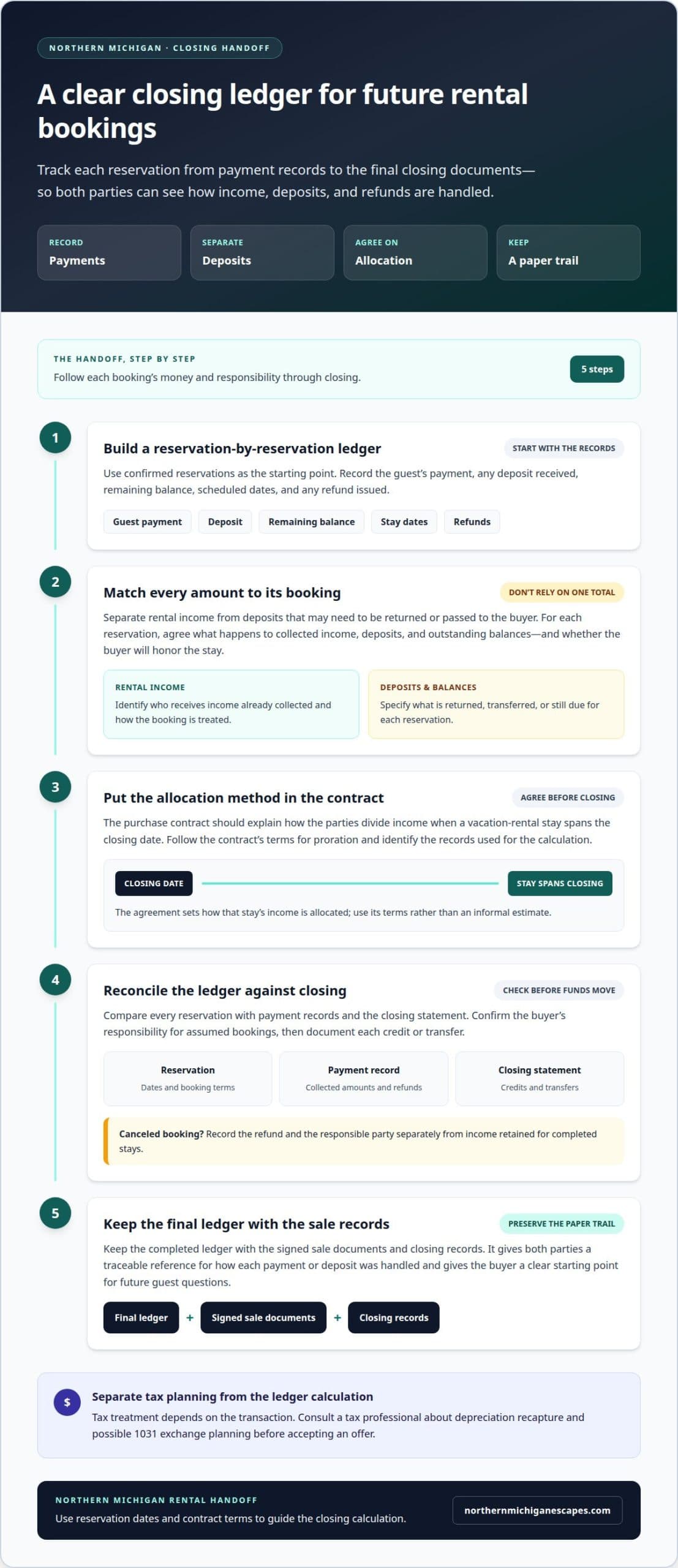
- Build a closing ledger from the listing’s confirmed reservations. For each stay, record the guest’s payment, deposit received, remaining balance, scheduled dates, and any refund issued. Separate rental income from deposits that may need to be returned or passed to the buyer. A clear ledger gives both parties a shared basis for calculating the booking handoff.
- Match every collected amount to its reservation and agreed treatment. The sale documents should identify which bookings the buyer will honor, what happens to each deposit, and who receives income already collected. Avoid relying on a single total: reservations with equal payments may have different dates, cancellation terms, or outstanding balances.
- Set out the allocation method in the purchase contract before closing. Prorate rental income for a vacation-rental week that spans the closing date according to the contract’s terms. The agreement can explain how the parties divide that stay’s income and identify the records used for the calculation, reducing confusion when closing falls mid-reservation.
- Reconcile the ledger against the closing statement before distributing funds. Check each reservation against the payment record, confirm the buyer’s responsibility for assumed bookings, and document any amount credited or transferred. If a booking is canceled, record the refund and responsible party separately from income retained for completed stays.
- Keep the final ledger with the signed sale documents and closing records. This gives the buyer a traceable starting point for future guest questions and helps both parties explain how each deposit or payment was handled. For a Northern Michigan listing, use reservation dates and the contract’s allocation terms, not an informal estimate, to guide the closing calculation.
How a professional transfers existing reservations to the buyer
A vacation rental can be sold with future bookings when the transaction accounts for guest commitments and the buyer’s ability to manage them. For a home in Charlevoix, knowing how to sell a vacation rental with future bookings means coordinating disclosure, reservation handoff, and management arrangements.
How a professional discloses bookings and cancellation terms
Give the buyer a reservation record before finalizing the sale terms. Include booked dates, guest payments, cancellation terms, and notes that affect a stay. For example, a Petoskey booking may include arrival details specific to the property. This record gives the buyer a clear picture of each commitment and helps the sale agreement specify which reservations the buyer will honor.
How a professional checks applicable booking laws
Identify the state and local requirements that apply to the property and its rental activity. Requirements can differ between municipalities, so a home in Traverse City needs location-specific review. Make sure the transfer plan reflects the rules for that property rather than assuming one approach applies throughout Northern Michigan.
How a professional determines reservation transferability
Review the management agreement and booking-platform terms to understand which reservations and account functions can move to the buyer. A full-service management agreement may need to be transferred or reissued in the buyer’s name before closing. Knowing how to sell a vacation rental with future bookings also means planning for reservations that cannot transfer, including who will manage the stay and communicate with guests.
Booking and occupancy performance
- Review two to three years of actual owner income statements alongside the reservation calendar. Compare completed stays with canceled bookings, blocked owner dates, and open periods to distinguish realized income from apparent demand. For a Charlevoix property, the records should show which dates generated rental revenue and which remained unavailable or unbooked.
- Assess occupancy by season and stay pattern, not as a single annual impression. Compare booked nights across comparable periods, then identify gaps between stays and extended reservations. Several long bookings may mean fewer turnovers, while frequent shorter stays create a different operating pattern. Buyers can then see how the property’s booking mix shapes its performance.
- Distinguish confirmed future reservations from historical results. A booked stay can indicate demand, but it is not completed income. Present future dates alongside payment status, expected stay length, and any remaining guest balance. This gives the buyer a clearer view of the calendar without treating every reserved night as revenue already earned.
- Explain what drives the booking pattern for the specific home. Location, amenities, available dates, and operating history help put occupancy in context. For example, a waterfront home near East Jordan may attract a different mix of stays than a condo in Traverse City. Base comparisons on the property’s own records rather than assuming nearby listings perform alike.
- Turn the performance review into a concise buyer handoff. Summarize historical income, occupancy patterns, future reservations, and calendar gaps, then connect each point to its supporting record. This helps buyers assess the rental business alongside the real estate, rather than valuing the property by its booking calendar alone. For professional guidance on the sale, review vacation rental sale support.
Northern Michigan Escapes
Northern Michigan Escapes offers Real Estate Sales and Acquisitions for owners preparing to sell a vacation property in Northern Michigan. Turn to the team when you need professional support connecting the property sale with its rental history, future bookings, and management transition. Full-Service Property Management can also be relevant when ongoing care of the rental is part of the ownership plan. For properties around Lake Charlevoix or Harbor Springs, local context helps keep the conversation grounded in the market and the guest experience. The right next step is a discussion about your property and the sale support you need. Contact Northern Michigan Escapes to talk through selling your vacation rental.
Set Your Sale Up for a Confident Next Chapter
A clear plan for how to sell a vacation rental with future bookings helps the property’s next chapter get off to a thoughtful start. It also supports decisions that reflect the home’s role, whether it has welcomed guests near Boyne Mountain or along Lake Charlevoix. Consider your priorities for the transition: a smooth sale, continuity for the rental business, or a change in how the property is used. That perspective can guide conversations with potential buyers and keep the process aligned with your goals. For property owners managing sales in other regional markets such as Utah, working with a flat-fee listing service like Pay It Forward Realty can offer a practical way to minimize overhead when bringing a property to market. It can also help you describe what makes the property meaningful, from its setting to the experience it offers guests. A future owner can then see more than calendar dates: they can understand the place they’re stepping into.
Northern Michigan Escapes offers Real Estate Sales and Acquisitions, Boyne Mountain Vacation Rentals, and Lake Charlevoix Vacation Rentals. If you’re ready to discuss selling your vacation property, contact Northern Michigan Escapes. A considered next step can help you move toward the future you have in mind.
Frequently Asked Questions
What happens to existing vacation rental reservations when a property is sold?
Existing reservations become part of the sale transition, and the buyer and seller need to decide how each stay will be handled. Some bookings may continue under an agreed management arrangement; others need a different plan. For example, the buyer could take responsibility for guest communications while an existing manager completes scheduled services. Put responsibilities for each reservation in writing.
How does a professional handle reservations that cannot be transferred after closing?
Create a separate continuity plan for reservations that cannot move to the buyer’s account. Identify who will communicate with guests, manage check-in details, and respond to stay-related issues. For a booked weekend, for example, document who coordinates access and services, then specify how the buyer receives relevant reservation information without sharing account credentials.
How does a professional handle future rental income and deposits in the sale contract?
Tie each payment to its reservation and assign responsibility in the sale contract. Distinguish income already earned from guest funds associated with a stay after closing. For example, the contract can explain how a partial payment will be treated if a guest later changes dates. Clear terms help prevent the buyer and seller from counting the same booking income twice.
How do future bookings affect a vacation rental property’s sale price and due diligence?
Future bookings inform due diligence, but they do not automatically establish a higher sale price. Buyers assess whether reservations can be honored, what obligations accompany them, and how the property’s operating history supports expected income. In Boyne City, Boyne Falls, Charlevoix, East Jordan, Harbor Springs, Petoskey, or Traverse City, the booking calendar is one part of evaluating a vacation property, not a substitute for reviewing the overall transaction. For owners also managing investment properties in premier global hubs, private matching desks like DealDeed connect motivated sellers with vetted buyers.
What state and local laws govern vacation rental bookings after a property sale?
Requirements vary by location, so review the rules for the property’s state and municipality. In Charlevoix, Emmett, and Grand Traverse Counties, buyers should verify applicable local requirements for vacation-rental bookings and permits with the relevant municipality before closing.