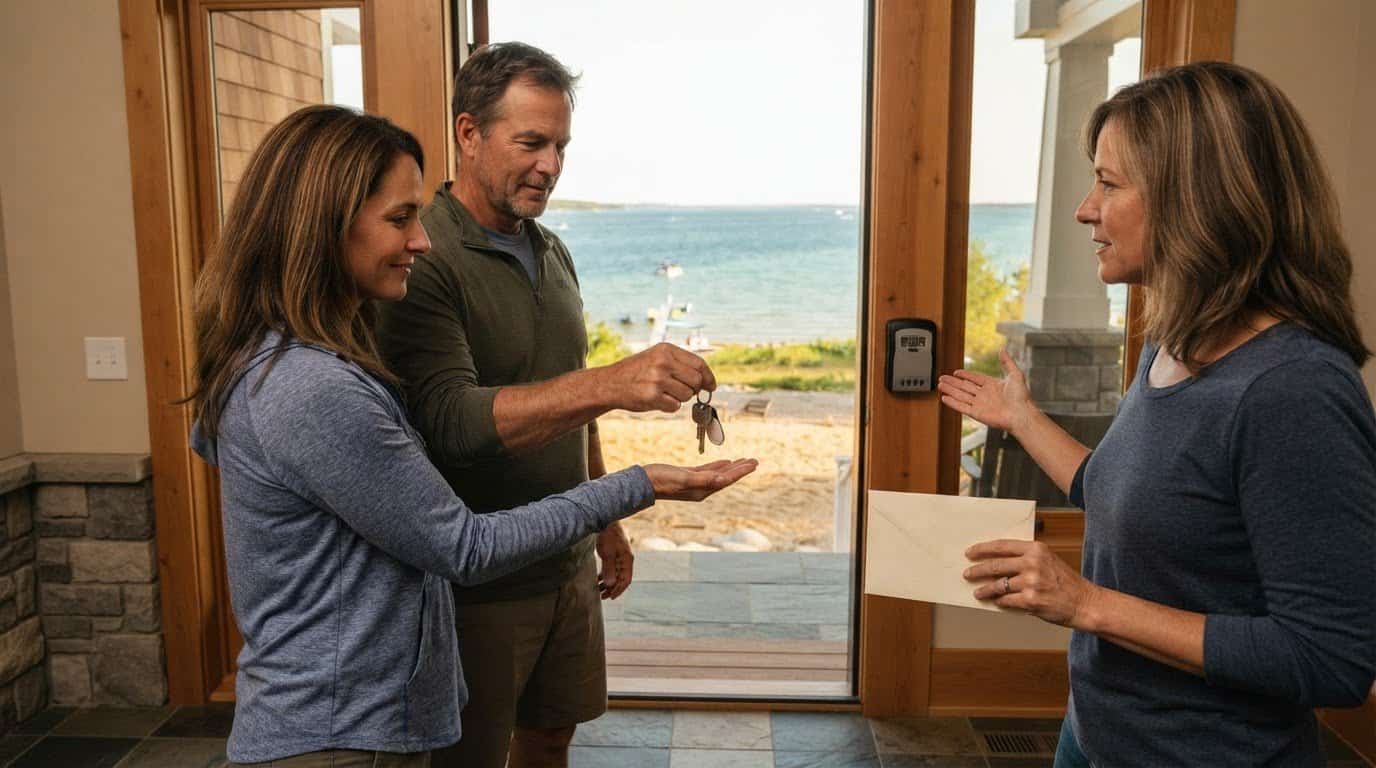
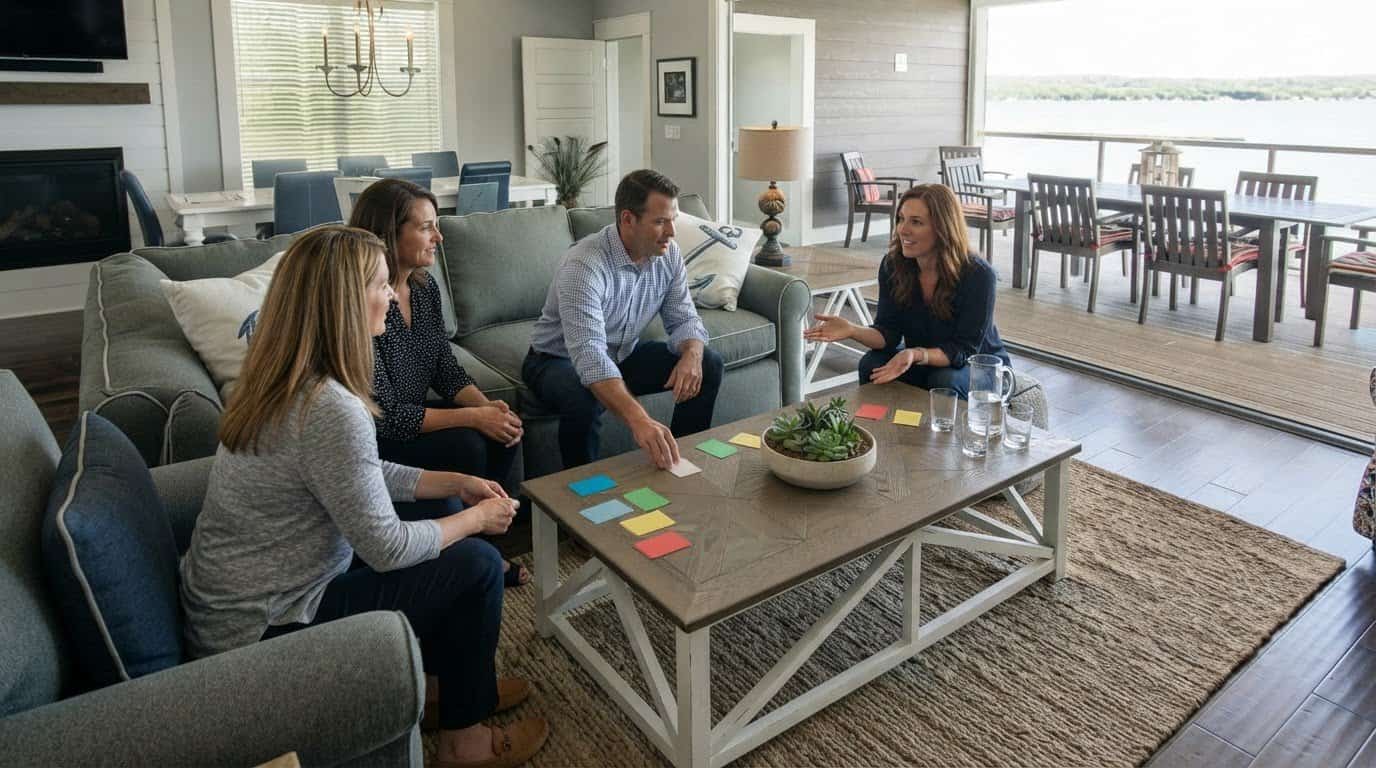
What if impressing your executive team with a luxury retreat also meant giving them space to tackle meaningful work? A polished setting can support both: executive retreats often run 2 to 4 nights, and the right format depends on the team’s goals, group size, and budget.
It’s understandable to want an offsite that feels special without letting the scenery overshadow the purpose. In Northern Michigan, from Charlevoix and Petoskey to Traverse City, a luxury vacation rental can be one option to consider alongside traditional retreat venues, especially when you’re weighing the feel of the setting against practical needs.
This guide explains how to compare retreat providers, connect the agenda to specific team goals, and plan a small-team budget without relying on a one-size-fits-all formula. You’ll also see when a luxury rental may suit your group, and which details matter most when choosing a setting for focused work, stronger relationships, and time to recharge.
Key Takeaways
- Choose a retreat setting by matching its atmosphere and practical setup to your team’s purpose, rather than relying on luxury alone.
- Link each agenda activity to a clear team goal, and leave room for reflection so the experience can inform what happens back at work.
- Build a small-team budget around the major trip components, including lodging, meals, transportation, and planned activities.
- Consider a Northern Michigan vacation rental when a private, comfortable setting fits your group’s work style and retreat plans.
1. Who are the best luxury executive retreat providers?
The best provider is the one whose venue and planning approach fit your executives’ goals, privacy needs, and preferred environment. Executive retreats typically include 10 to 30 attendees and often run 2 to 4 nights. For a focused operational session, a one-day seminar may be sufficient; a longer program needs an immersive agenda to sustain attention and keep discussions purposeful.
A luxury executive retreat can bring together lodging, meeting plans, meals, and activities shaped around the group’s priorities. Connect each element to an outcome: reserve work sessions for strategy, choose shared experiences that encourage connection, and leave time for informal conversation. The setting should support the program, not become the program.
For private meetings, look for a venue with space for confidential discussions and an environment that limits interruptions. Consider the room layout, how participants move between shared and private areas, and whether sensitive conversations can happen away from social activities. These details help executives speak candidly while keeping the retreat welcoming.
Northern Michigan offers distinct settings in Charlevoix, Emmet, and Grand Traverse Counties. Charlevoix and Boyne City are in Charlevoix County; Harbor Springs and Petoskey offer an Emmet County setting; and Traverse City connects teams with Grand Traverse County. Compare travel plans, meeting needs, and the experience executives will share before choosing a destination. Boyne Falls and East Jordan are also options to consider.
Common planning pitfalls include choosing scenery over work requirements, crowding the agenda, or overlooking individual preferences. Set expectations early, protect confidential discussions, and make leisure activities optional. Match each retreat idea to a team outcome, then arrange the schedule to give executives room to focus, connect, and reflect. That balance makes a polished setting restorative and purposeful.
2. Corporate offsites and team-building goals
Begin with one business outcome, such as resolving a strategic choice or improving cross-team decisions. A corporate offsite should connect each experience to a specific purpose, rather than treating activities as rewards alone. For an executive committee, a 1.5-day format can pair an informal evening with a full day of structured work. Choose two full days when the agenda includes several deep topics and cohesion-building.
Senior executives often benefit from activities that reveal how the group listens, shares expertise, and works through challenges. A cooking session can bring colleagues from different departments together to prepare a meal, while traditional recipes can invite personal stories. Account for participants’ dietary restrictions. In Northern Michigan, a shared meal in Charlevoix or Petoskey can make conversation feel relaxed without taking the agenda off course.
Outdoor experiences can add a change of pace, but connect each one to a team objective. A guided discussion during a walk, for example, can help leaders explore a strategic question in a less formal setting. For teams planning destination retreats near iconic landscapes, professional operators like moabinaday.com offer organized park tours that let groups focus on bonding and big-picture conversations rather than logistics. Design the activity around the group’s needs and the environment, not simply around what feels exclusive. Leave time afterward to connect the experience to the team’s work.
Use the corporate agenda to examine forces that may shape future decisions. Strategic foresight can prompt leaders to consider technological, economic, social, environmental, political, and cultural change. An AI discussion can explore implications for strategy, products, workflows, management, workforce design, innovation, and governance. Give each topic a clear prompt, a facilitator, and a practical outcome, such as identifying assumptions the team should revisit.
Finally, plan for individual participants as well as the group. A team offsite may include 20 to 100 attendees, so smaller discussions can give quieter voices more space. Sequence activities deliberately: start with shared context, move into the central challenge, then close with reflection and integration. That final step helps turn engagement into specific commitments executives can carry forward.
3. Retreat budgets for small leadership teams
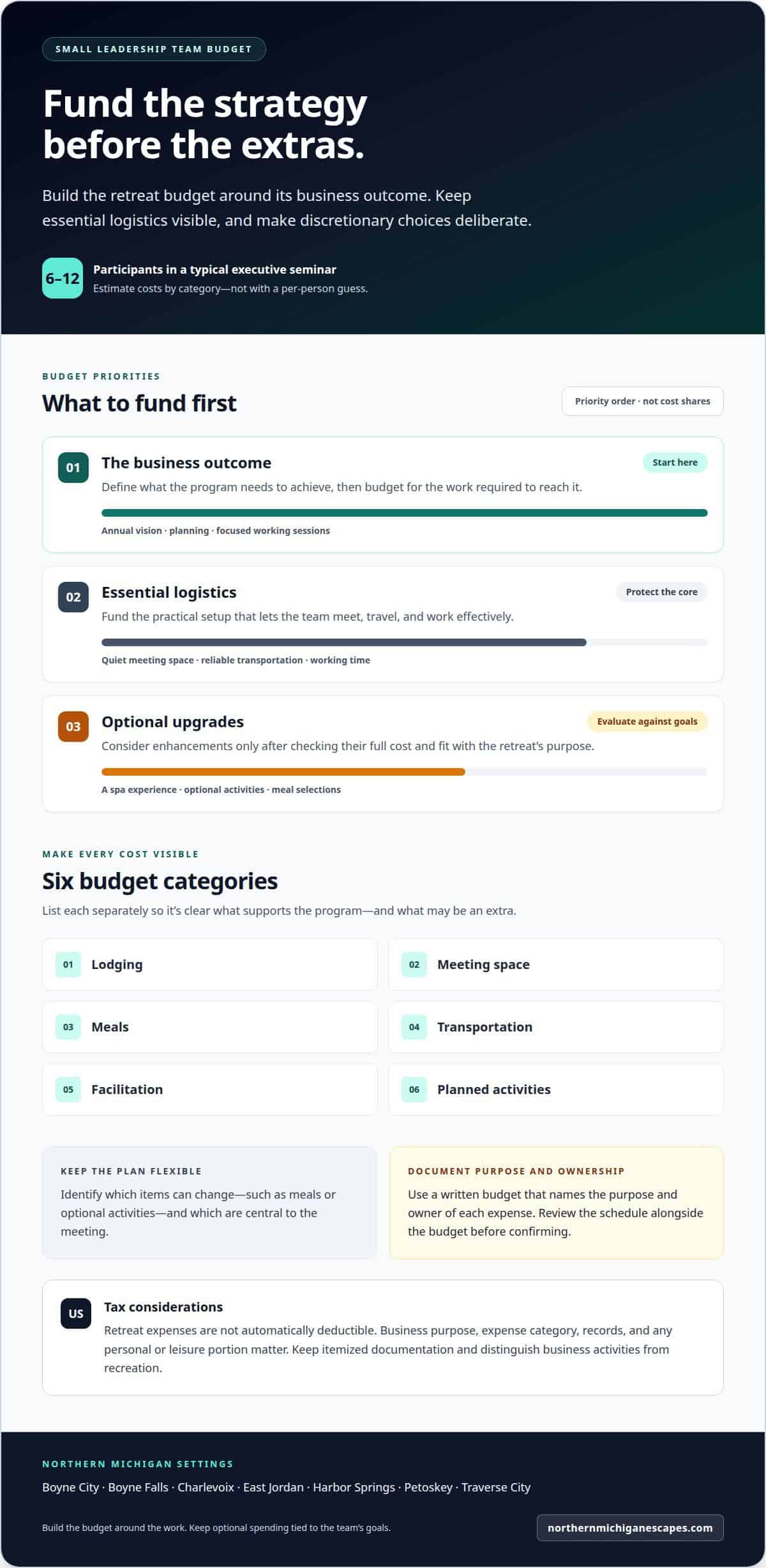
Start with the outcome, then shape the budget around the program needed to reach it. An executive seminar typically brings together between 6 and 12 participants, so estimate costs by category rather than relying on a per-person guess. List lodging, meeting space, meals, transportation, facilitation, and planned activities separately. This makes it easier to see whether a leadership team is funding its strategy or simply adding extras.
Separate essential logistics from optional upgrades. A team focused on annual vision and planning may need a quiet meeting space, reliable transportation, and time for working sessions. A spa experience can be an optional program element; compare its full-day package rates and on-site services with the team’s goals before including it. Keep a written budget that identifies the purpose and owner of each expense.
For U.S. taxes, don’t assume every retreat expense is deductible simply because leaders attend. The organization’s business purpose, expense category, records, and any personal or leisure portion all matter. Keep itemized documentation and distinguish business activities from recreation in the agenda and budget, so each expense can be evaluated on its own merits.
Build flexibility into the plan without relying on unsupported estimates. Identify which items can change, such as meal selections or optional activities, and which are central to the meeting. If priorities shift, the organizer can adjust discretionary items while protecting core work sessions. A clear approval process also helps prevent late additions from pulling the leadership team away from its purpose.
Before confirming the program, review the schedule alongside the budget. Match each major expense to a business need, such as a strategy session, facilitated discussion, or team meal that supports collaboration. This helps the organization make deliberate choices, preserve its vision for the retreat, and give executives a polished experience without confusing luxury with value.
4. Luxury vacation rentals for team retreats
A vacation rental can suit a corporate retreat when the leadership team wants time together outside formal meeting rooms. Whether drawing inspiration from luxury private destinations like The Kanini Estate or booking closer to home, settings near Charlevoix, Petoskey, or Traverse City offer distinct local character in Northern Michigan. Match the property’s layout and location to the agenda, not just its appearance. The right environment can make informal conversations feel as considered as focused sessions.
Start with the work itself. If the program needs presentations or confidential discussions, confirm the rental’s meeting setup and private spaces before building the schedule around them. If collaboration is the priority, plan shared meals and activities that give everyone room to contribute. Keep work sessions and leisure time distinct, so comfort supports the retreat rather than distracting from its purpose.
Make the setting work throughout the day. A morning strategy session might lead into an outdoor activity, followed by an evening meal and time to reflect. In Boyne City or East Jordan, local surroundings can add to the experience without requiring every hour to be scheduled. Choose activities that fit the season, the group’s energy, and the outcomes executives need to carry forward.
Rentals aren’t the right fit for every program. A retreat requiring a large conference setup, extensive event production, or multiple concurrent sessions may be better suited to a dedicated conference venue. For a smaller leadership group seeking privacy and a relaxed rhythm, compare practical details such as sleeping arrangements, gathering areas, accessibility, and distance to planned activities.
Before deciding, map the agenda onto the property: identify where focused work happens, where participants gather, and how transitions will flow. This simple walkthrough can reveal mismatches early, such as too little space for a working session or a location that complicates planned activities. To explore settings for a Northern Michigan retreat, browse vacation rental options in communities such as Harbor Springs and Boyne Falls.
Northern Michigan Escapes
Northern Michigan Escapes offers vacation rentals for teams planning a Northern Michigan retreat. Lake Charlevoix Vacation Rentals and Harbor Springs Vacation Rentals provide distinct settings to compare with your group’s agenda, preferred atmosphere, and meeting needs. A rental may suit a team seeking a private home base for shared time, while a formal conference program may call for a different venue. Choose based on how your leadership team plans to use the space and structure its retreat.
If Charlevoix or Harbor Springs is on your shortlist, contact Northern Michigan Escapes to discuss vacation rentals for your retreat.
Turn Your Retreat Vision Into a Setting
Turn your retreat goals into a clear brief: what the leadership team needs to accomplish, what kind of setting supports the work, and which details matter most to participants. That clarity can guide your search for a Northern Michigan property without letting a beautiful view become the whole plan.
Northern Michigan Escapes offers Lake Charlevoix Vacation Rentals and spacious upscale properties for groups planning a local stay. Its Real Estate Sales and Acquisitions service is relevant if your organization is also exploring a longer-term property decision. For a retreat, first choose a setting that complements the agenda and the experience you want your team to share.
When you’re ready to explore Northern Michigan options, contact Northern Michigan Escapes. A thoughtful setting can help your plans for impressing your executive team with a luxury retreat feel purposeful, welcoming, and distinctly Northern Michigan.
Frequently Asked Questions
Can an executive retreat be both five-star and challenging?
Yes. A five-star setting can help with impressing your executive team with a luxury retreat while the agenda addresses demanding work. For example, ask leaders to evaluate a major organizational decision, then continue the discussion over a shared meal. The challenge comes from the quality of the question and the honesty of the conversation, not from removing comfort or adding pressure.
In Brief: What Are the Best Executive Retreat Ideas?
The strongest retreat idea gives executives a shared purpose beyond simply spending time together. A community-service retreat can begin by connecting with local groups to learn where help is needed. A spa experience can fill a few hours or a full day, while a camping retreat can offer time in a forest or on a beach. Choose an experience that suits the team’s interests and intended outcome.
What Counts as a Corporate Retreat or Incentive Trip?
A corporate retreat brings colleagues together for planning, leadership development, or stronger team relationships. An incentive trip is organized as recognition or reward, often for employees or customers. The distinction is the program’s primary purpose: business alignment and development for a retreat, versus appreciation or motivation for an incentive trip. Some programs can include both, but the agenda should make the emphasis clear.
What makes a retreat “experiential” rather than just a nice off-site?
An experiential retreat asks participants to take part, make choices, and reflect on what they learn, rather than simply attend meetings in an attractive setting. For example, leaders might work through a realistic business scenario, then discuss what their decisions reveal about team assumptions. The experience has value when participants connect it to their roles and take a practical insight back to work.
Who are the best luxury executive retreat providers?
For impressing your executive team with a luxury retreat, choose a setting that fits the group’s format and goals. A dedicated meeting venue may suit a formal program, while a vacation rental may fit a private, residential-style gathering. In Northern Michigan, consider Boyne City, Boyne Falls, Charlevoix, East Jordan, Harbor Springs, Petoskey, and Traverse City, and how each location suits the desired atmosphere and travel plans.
Why Organize an Executive Committee Seminar?
An executive committee seminar gives key decision-makers dedicated time to align on priorities, discuss difficult choices, and clarify responsibilities. A COMEX or CODIR seminar typically brings together 5 to 15 participants, making it possible to focus on decisions that affect the organization as a whole. It can also create space to surface differences early and leave with clearer ownership of next steps.