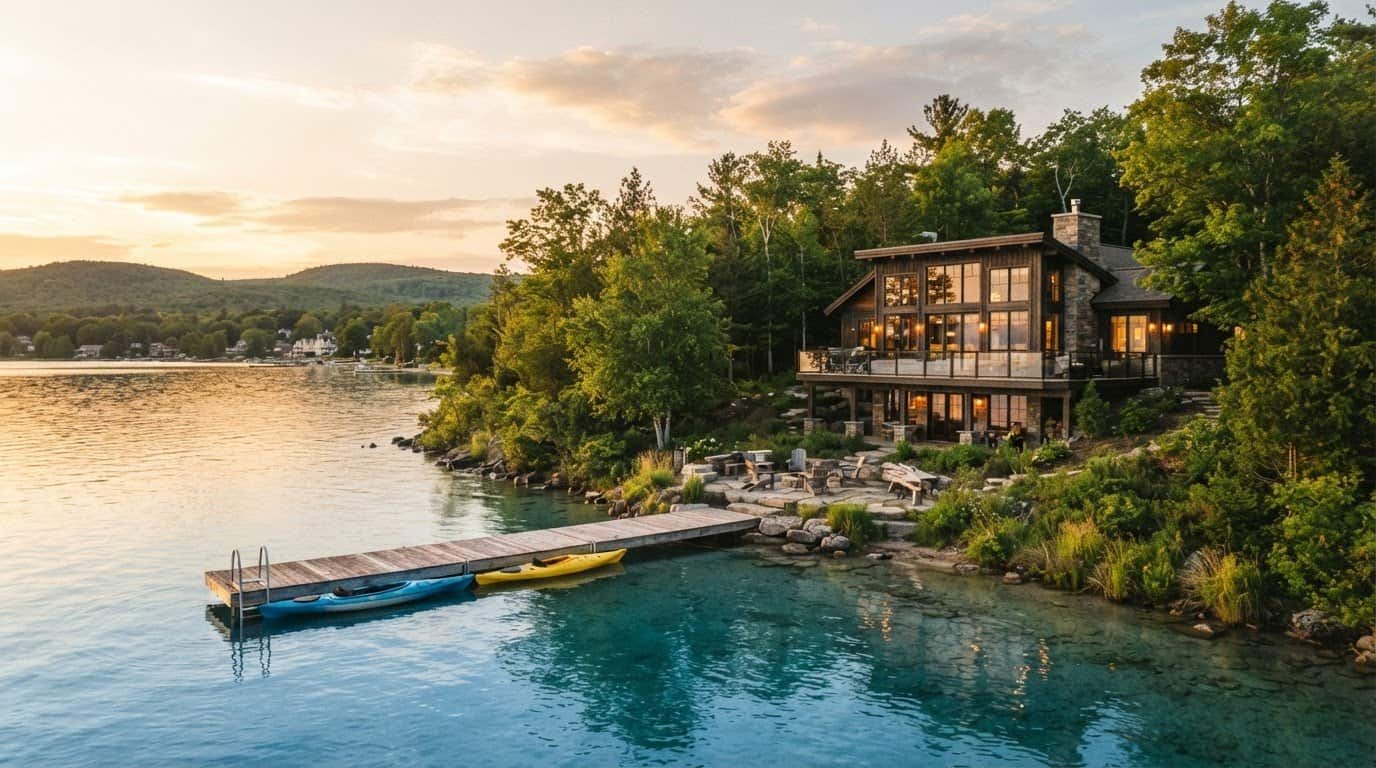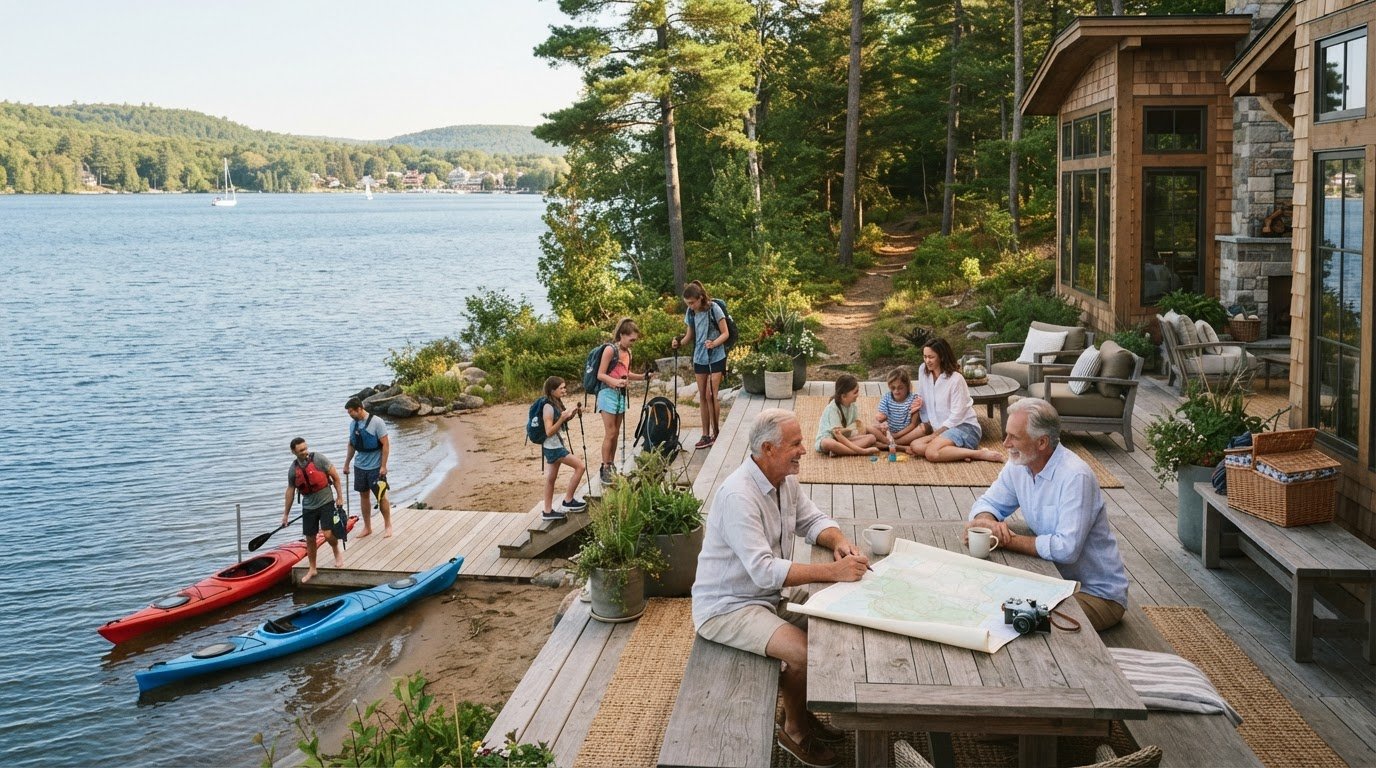

Owning a sun-drenched cottage on Walloon Lake or a sophisticated suite in Traverse City is the ultimate northern dream, yet the shifting tides of local governance can quickly turn that dream into a logistical headache. With Michigan tourism spending hitting $54 billion in 2025, the stakes for your investment have never been higher. You’ve likely noticed that short term rental regulations northern michigan communities enforce are becoming increasingly hyper-local and complex. It’s frustrating to face a sudden permit cap in Charlevoix or a moratorium in Petoskey when all you want is to provide a world-class stay for your guests. This 2026 guide offers a clear roadmap to navigate these hurdles, ensuring your property management strategy is both legal and lucrative. We’ll break down the specific licensing fees in Traverse City, the nuances of the 6% state use tax, and the essential steps to protect your peace of mind from Boyne City to Harbor Springs.
Key Takeaways
- Understand the critical difference between Michigan’s 6% Use Tax and the proposed 2026 excise tax to ensure your financial planning remains accurate.
- Compare the specific short term rental regulations northern michigan cities like Traverse City and Charlevoix enforce to determine where your investment is most secure.
- Identify why private HOA bylaws often supersede municipal rules and learn the reality of “grandfathering” protections for existing rentals.
- Discover how professional property management provides a shield against shifting local ordinances by automating tax collection and compliance monitoring.
The Evolving Landscape of Northern Michigan Short Term Rental Regulations
The golden glow of a sunset over Lake Charlevoix or the crisp morning air at Boyne Mountain represents the quintessential retreat for thousands of visitors each year. Under Michigan law, a Short-term rental typically involves any residential dwelling offered for lease for periods of 30 days or less. As we move through the 2026 legislative session, the conversation around short term rental regulations northern michigan owners must follow has shifted toward protecting property rights while ensuring local municipalities retain their unique charm. This tension is particularly palpable in regions like Petoskey and Harbor Springs, where the influx of vacationers supports local boutiques and bistros but also prompts concerns about neighborhood density. Balancing the needs of year-round residents with a tourism economy that reached $54 billion in 2025 requires a nuanced approach that respects both the quiet of a residential street and the vibrancy of a resort town.
To gain a deeper perspective on how these rules impact your property, watch this helpful overview:
Why Northern Michigan Regulations Are Unique
Emmet and Charlevoix counties experience dramatic seasonal shifts that complicate policy making. In areas like Boyne Falls, the proximity to Boyne Mountain creates high-density clusters that require different management than a secluded cabin in East Jordan or a waterfront home in Charlevoix. Local officials often view these rentals through the lens of infrastructure demand, leading to the varied rules you see today. This local-first approach means a strategy that works in Traverse City might not apply to the shores of Walloon Lake. Municipalities are increasingly focused on maintaining community character, which often translates to stricter noise ordinances, trash management protocols, and parking requirements that guests must follow to keep the peace.
The 2026 Outlook for Property Owners
Looking ahead, 2026 may bring a more unified approach to state-wide permit requirements, a move heavily influenced by the Michigan Short Term Rental Association. While state taxes are currently fixed, the day-to-day operational rules remain in the hands of your local township board. Staying informed about the short term rental regulations northern michigan communities adopt is the best way to safeguard your investment. For those exploring the market, understanding these shifts helps you transition from a simple property owner to a sophisticated hospitality provider. You can find more details on preparing your property in our guide to vacation rentals in Northern Michigan. Compliance isn’t just about following rules; it’s about being a good neighbor and ensuring the long-term viability of the hospitality industry in our regional enclaves.
State Mandates: The 6% Use Tax and Beyond
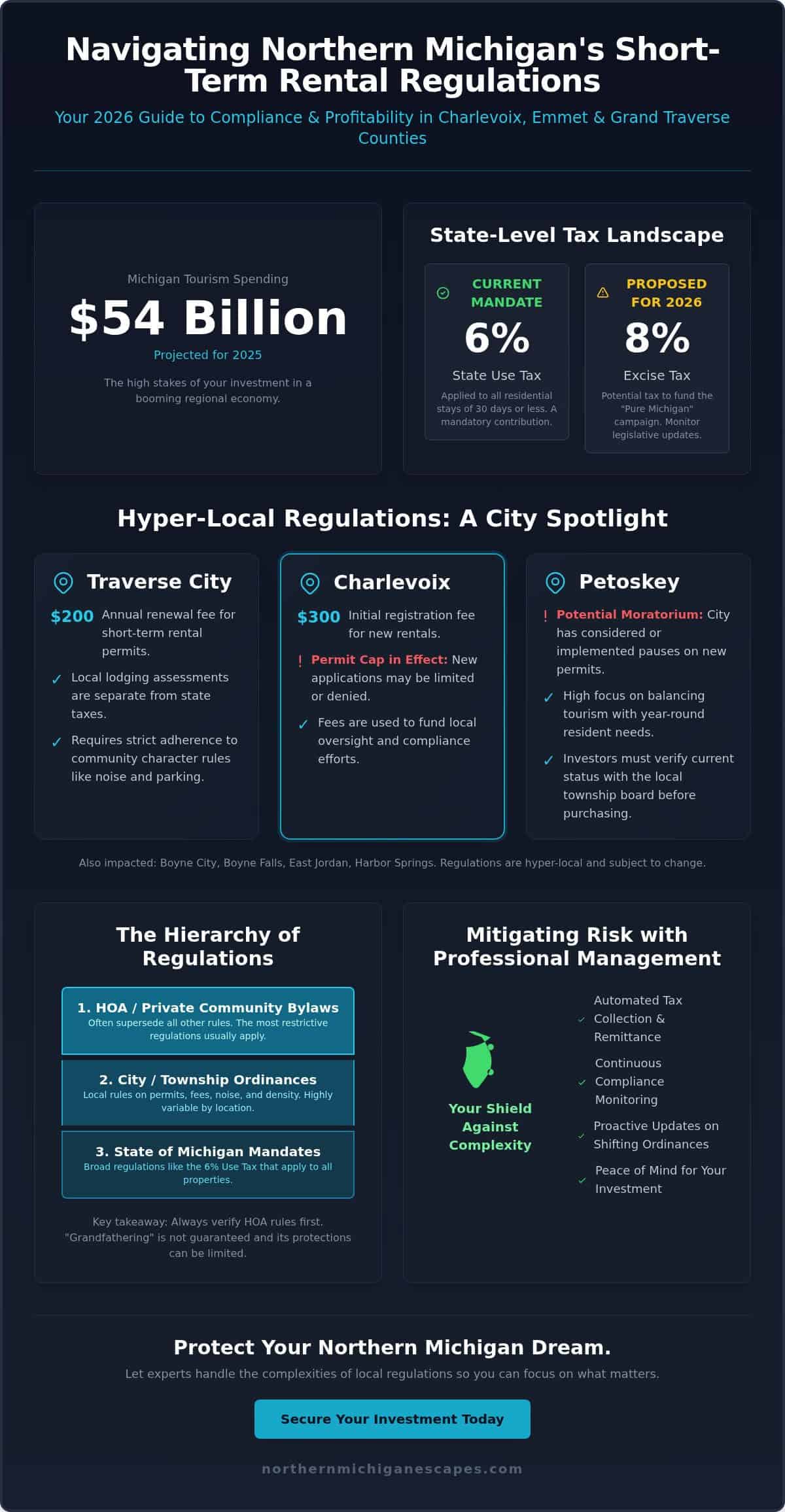
While the natural beauty of East Jordan or the sun-dappled slopes of Boyne Mountain draw the crowds, the financial framework keeping your investment secure is built on state-level compliance. Michigan requires a 6% Use Tax on all residential dwellings offered for lease for periods of 30 days or less. This isn’t just a suggestion; it’s a mandatory contribution to the state treasury that helps maintain the infrastructure supporting our vibrant tourism industry. As of May 2026, the short term rental regulations northern michigan owners must monitor also include the ongoing discussion regarding a proposed 8% excise tax for the Pure Michigan campaign. While this remains a legislative proposal, its potential implementation would require a strategic adjustment to your revenue forecasting for properties in Petoskey and Harbor Springs.
It’s vital to distinguish between these state mandates and local lodging assessments. The $200 annual renewal fee in Traverse City or the $300 registration fee in Charlevoix are municipal requirements. They stay within the city to fund local oversight. For annual tax compliance, you’ll need to maintain detailed documentation, including stay durations, gross rental receipts, and proof of any taxes already remitted by third-party platforms. Accuracy here is the key to maintaining your status as a trusted local provider.
Remitting Taxes: Direct Bookings vs. Third-Party Platforms
How you collect and remit taxes depends heavily on your booking source. Platforms like Airbnb typically handle the 6% Use Tax collection and remittance automatically. However, research indicates that other major platforms, such as VRBO, may not provide this service in all instances, leaving the responsibility of remittance to the property owner. If you’re taking direct bookings for your Lake Charlevoix vacation rentals, you must manually track, collect, and remit these funds to the Michigan Department of Treasury. Keeping a dedicated ledger for each guest stay ensures you’re never caught off guard during tax season. For owners seeking to simplify these complexities, our professional property management services provide a seamless bridge between luxury hospitality and rigorous compliance.
State-Level Safety Standards
Safety is the silent foundation of a premier getaway. Michigan building codes dictate specific occupancy limits based on square footage and egress points, ensuring that your home remains a safe haven for every visitor. Fire safety is a top priority, with mandates for functional smoke detectors and carbon monoxide alarms in designated areas. Whether your property is in the heart of Boyne City or tucked away in a quiet enclave, maintaining an updated local emergency contact is a standard state expectation. These small details reflect the meticulousness of a sophisticated local guide and protect the long-term value of your Northern Michigan investment.
City-Specific Rules: Charlevoix, Petoskey, and Traverse City
While state taxes provide the financial framework, the heartbeat of compliance lives in the short term rental regulations northern michigan municipalities have crafted to protect their local culture. In Traverse City, the environment is highly structured to preserve the residential soul of its neighborhoods. Unhosted short-term rentals are generally not permitted in residential zones, and the city requires a vacation home rental license with a $200 application fee and a $200 annual renewal. Contrast this with the more open market of Boyne Falls, where the proximity to the resort lifestyle makes the barrier to entry much lower for those looking to invest in Boyne Mountain vacation rentals. This disparity highlights why a town-by-town strategy is essential for any serious investor.
Moving toward the water, the City of Charlevoix maintains a strict cap on “Business Rentals” in residential zones, limiting them to just 80 units total. If you’re lucky enough to secure a spot, the annual registration fee is $300; otherwise, you’ll find yourself on a waitlist with a non-refundable $50 fee. Petoskey takes a different stance, as a 2014 ordinance restricts new rentals to business districts only. Owners in these enclaves must navigate a rigorous inspection process to ensure their suites meet city safety and aesthetic standards. These hyper-local rules ensure that whether you’re in East Jordan or Bay Harbor, the quality of the guest experience remains impeccably high.
Navigating Charlevoix and Emmet County Ordinances
Boyne City seeks a delicate balance, ensuring that vacationers and locals coexist peacefully through thoughtful zoning that protects residential integrity. Harbor Springs is particularly attentive to noise and parking enforcement, where a quiet evening on a historic porch is a protected right for every resident. East Jordan is also refining its approach to waterfront stays, reflecting a broader trend toward more structured oversight across the region. Staying ahead of these short term rental regulations northern michigan towns update frequently is the best way to ensure your property management strategy remains compliant and profitable.
Traverse City and Grand Traverse County Restrictions
The high demand for a Traverse City retreat has led to significant pressure on permit availability, making existing licenses incredibly valuable. In certain Grand Traverse County zones, the “Principal Residence” requirement means owners must live in the home for a portion of the year to qualify for a rental permit, effectively limiting unhosted investment properties. Understanding the nuanced zoning differences between commercial and residential districts is essential before you commit to a purchase. For a deeper dive into the specifics of this market, explore our Traverse City Vacation Rentals: The Ultimate 2026 Guide. This localized knowledge is what transforms a property owner into a true regional expert.
The Impact of HOAs and Private Community Bylaws
While city halls in Petoskey or Traverse City establish the broad legal framework, the fine print of your investment often lives within the private governing documents of a Homeowners Association (HOA). In many cases, these private contracts are more restrictive than the short term rental regulations northern michigan municipalities enforce. An HOA has the legal authority to prohibit short-term leasing entirely, even if the surrounding township allows it. This creates a dual layer of compliance that owners must navigate with meticulousness. In luxury enclaves like Bay Harbor, rules often extend beyond simple permits to include aesthetic standards, specific quiet hours, and even the type of watercraft guests may bring to the docks. Understanding these nuances is the difference between a flourishing retreat and a series of costly fines.
A common misconception among owners is the “Grandfathering” myth. Many believe that if they were renting their property before an HOA adopted a restrictive amendment, they’re exempt from the new rules. Michigan case law has frequently challenged this assumption, often siding with the association’s right to update bylaws for the benefit of the collective community. This makes it essential to review the most recent meeting minutes and board decisions before finalizing any real estate acquisition in Harbor Springs or Boyne City. Guest management is also a primary focus for these associations, with many implementing strict caps on the number of vehicles allowed in a driveway or limiting the use of communal amenities like private beaches and tennis courts to registered owners only.
Investing Near Boyne Mountain and High-Density Resorts
Properties in Boyne Falls, particularly those within the resort’s footprint, are subject to the Boyne Mountain Master Association rules. These regulations are designed to maintain a consistent atmosphere of luxury across the mountain. For owners of ski-in ski-out vacation rentals, this means adhering to specific trash removal schedules and snow removal protocols that keep the slopes pristine. The high-density nature of these resorts leads to increased scrutiny regarding noise and guest behavior, making a proactive management strategy vital for long-term success. If you’re looking to maximize your ROI while staying within these complex guidelines, our full-service property management team can bridge the gap between resort expectations and your financial goals.
Waterfront Property Considerations
Owning a home on Lake Charlevoix or Walloon Lake brings its own set of unique shoreline protection rules. These bylaws often regulate dock usage and boat slip assignments, which can be a point of contention in quiet waterfront communities. In East Jordan, for example, neighbor relations are paramount; a single disruptive guest can prompt a board to reconsider its stance on short-term stays. Responsible owners ensure their guests understand the etiquette of the lake, from wake-zone restrictions to the proper storage of kayaks and paddleboards. Preserving the tranquil allure of these regional enclaves is a shared responsibility that protects the value of every home on the water.
Mitigating Risk with Professional Property Management
The shifting sands of short term rental regulations northern michigan communities implement can make even the most seasoned investor feel uneasy. Owning a piece of the “Up North” dream shouldn’t come with the constant fear of a surprise ordinance change or a missed tax deadline. This is where the quiet reassurance of a local expert becomes your greatest asset. Professional property management transforms the burden of compliance into a streamlined, hands-off experience. By tracking municipal updates in real-time, a dedicated manager ensures your home in Traverse City or Harbor Springs remains on the right side of the law, even as rules evolve. Compliance is your legal armor. It protects your legacy.
Beyond legal monitoring, management teams provide a critical buffer against the logistical hurdles of tax remittance. Instead of manually calculating the 6% state use tax and local fees for every guest stay in Petoskey, these systems are automated to ensure precision and peace of mind. Local support also serves as a vital shield for your reputation. Having a professional presence available to address guest needs at any hour prevents the noise and nuisance complaints that often lead to regulatory friction in quiet enclaves like East Jordan. Additionally, professional housekeeping services ensure your property meets the rigorous health and safety standards required by modern building codes and discerning travelers alike.
The Northern Michigan Escapes Compliance Advantage
Our team maintains direct, professional relationships with zoning administrators across Charlevoix and Emmet counties. This local standing allows us to navigate the complexities of permit applications and renewals with a level of meticulousness that individual owners often find difficult to match. We handle the paperwork and the deadlines. This allows you to focus on the joy of ownership while we manage the intricacies of full-service property management. Whether you’re navigating the permit caps in the City of Charlevoix or the specific license requirements in Traverse City, our expertise ensures your property remains a premier, legal destination for years to come.
Maximizing ROI While Remaining Compliant
Compliance shouldn’t come at the cost of your financial performance. We utilize dynamic pricing strategies that account for local tax burdens and seasonal shifts, ensuring your revenue remains robust despite regulatory hurdles. By marketing your home as a high-end, fully compliant experience, we attract guests who value the quality and security of a professionally managed stay. This approach doesn’t just protect your current income; it safeguards the long-term value of your real estate investment in the most sought-after enclaves of Northern Michigan. From the vibrant slopes of Boyne Falls to the tranquil shores of Walloon Lake, a sophisticated management strategy is the key to balancing hospitality with high-end performance. We take care of the details. You enjoy the results.
Securing the Future of Your Northern Michigan Investment
The landscape of short term rental regulations northern michigan communities maintain is as dynamic as the seasons themselves. Success in 2026 requires more than just a beautiful property in Harbor Springs or a cozy retreat in Boyne Falls; it demands a meticulous commitment to local licensing and tax precision. By understanding the specific permit caps in Traverse City and the nuances of HOA bylaws in Bay Harbor, you position your investment for enduring growth. These local rules ensure our regional enclaves remain the premier destinations they are today while protecting the long-term value of your real estate.
Managing the complexities of these shifting ordinances doesn’t have to be a solo endeavor. As local experts in Charlevoix and Emmet Counties, our team specializes in full-service compliance and tax handling for over 250 luxury properties. We take the burden of paperwork off your shoulders, providing the quiet reassurance that your property management strategy is perfectly aligned with current laws. Protect your investment and stay compliant with our professional property management services. Your journey toward a stress-free and profitable rental experience starts with the right local partner. Let’s ensure your home remains a cherished part of the Northern Michigan landscape for years to come.
Frequently Asked Questions
Is a permit required for short term rentals in Northern Michigan?
Most developed municipalities in the region require a specific license or permit to operate a vacation home legally. In cities like Traverse City and Charlevoix, you’ll need to submit a formal application and pay a registration fee before welcoming your first guests. Since short term rental regulations northern michigan communities enforce are determined at the local level, you must check with your specific township or city hall to confirm the current requirements for your property’s exact address.
How much is the short term rental tax in Michigan for 2026?
All rentals of 30 days or less are subject to a 6% statewide Use Tax in Michigan. As of May 2026, owners should also monitor the status of a proposed 8% excise tax intended to support the Pure Michigan campaign. While some booking platforms collect the 6% tax automatically, it’s ultimately the owner’s responsibility to ensure these funds reach the state treasury to avoid penalties. Accurate record-keeping is essential for every owner in our regional enclaves.
Can my HOA ban short term rentals if I am already renting my home?
Yes, your Homeowners Association usually has the legal right to ban or restrict rentals by amending its bylaws. Michigan courts have frequently upheld the authority of an association to update its rules for the collective good of the community, even if you were already renting your home. The idea that a property is “grandfathered” into old rules is often a myth; it’s essential to stay active in your local board meetings to protect your investment’s future.
What happens if I operate a short term rental without a permit in Traverse City?
Operating without a valid license in Traverse City can lead to significant daily fines and the potential loss of future eligibility for a permit. Local officials use sophisticated software to monitor listing platforms and identify unlicensed properties across the city. Beyond the financial penalties, unpermitted operations risk neighbor complaints that can trigger more aggressive enforcement actions. Maintaining compliance is the only way to ensure your property management strategy remains viable and secure.
Do I need special insurance for my Northern Michigan vacation rental?
Standard homeowners policies typically exclude coverage for commercial activities like short-term renting, leaving you vulnerable to liability and property damage claims. You should look for a specialized commercial or vacation rental policy that explicitly covers high-frequency guest stays. This specialized coverage provides the quiet reassurance that your home in Petoskey or Boyne City is protected against the unique risks associated with the hospitality industry, ensuring your peace of mind.
How do I apply for a short term rental license in Charlevoix County?
Licensing is handled by individual municipalities rather than the county, so you’ll need to contact the specific city or township office where your property is located. For example, the City of Charlevoix requires an annual registration fee and currently limits business rentals in residential zones to a total of 80 units. If the cap is reached, you may need to pay a small non-refundable fee to join the waitlist for a future license.
What are the occupancy limits for vacation rentals in Emmet County?
Occupancy limits are usually determined by the Michigan building code and the capacity of the property’s septic or sewer system. In municipalities like Harbor Springs and Petoskey, officials often limit occupancy to two persons per bedroom plus an additional two guests. These rules prevent overcrowding and ensure that your retreat remains a safe and comfortable environment for everyone in the neighborhood, preserving the tranquil allure of our regional enclaves.
Can I rent out my guest house or ADU as a short term rental?
Whether you can rent an accessory dwelling unit (ADU) depends entirely on the specific zoning district of your property. Some areas in Grand Traverse County allow ADUs for long-term residents but prohibit them for short-term vacationers to maintain housing availability. It’s vital to review the short term rental regulations northern michigan townships have adopted for your specific enclave, such as East Jordan or Boyne City, before investing in the renovation of a guest suite.