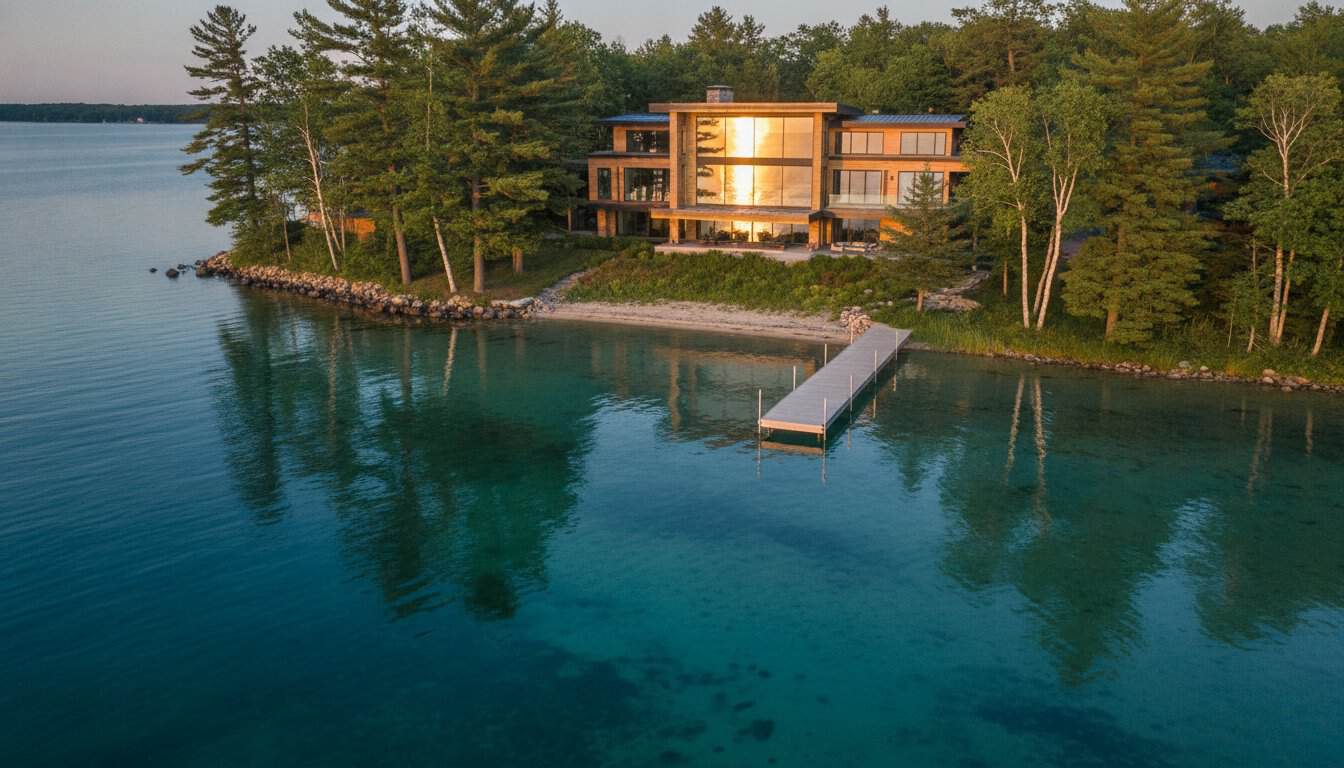

What if the most expensive investment of your life became a beautiful, landlocked prison for your yacht the moment the tide recedes? It’s a silent fear for many buyers, but in 2026, the distinction between a standard shoreline and a true deep water property is the difference between a restricted view and total maritime freedom. You likely already know that a breathtaking sunset is better enjoyed from the deck of your boat, yet the technical reality of controlling depth often feels like a confusing maze of riparian rights and permits.
Identifying a property with the right existing infrastructure requires a discerning eye and a deep understanding of the local market. For those looking at residential opportunities in West Michigan, AW Homes of Bellabay Realty offers expert guidance to help buyers find and secure premier waterfront homes that meet these strict maritime standards.
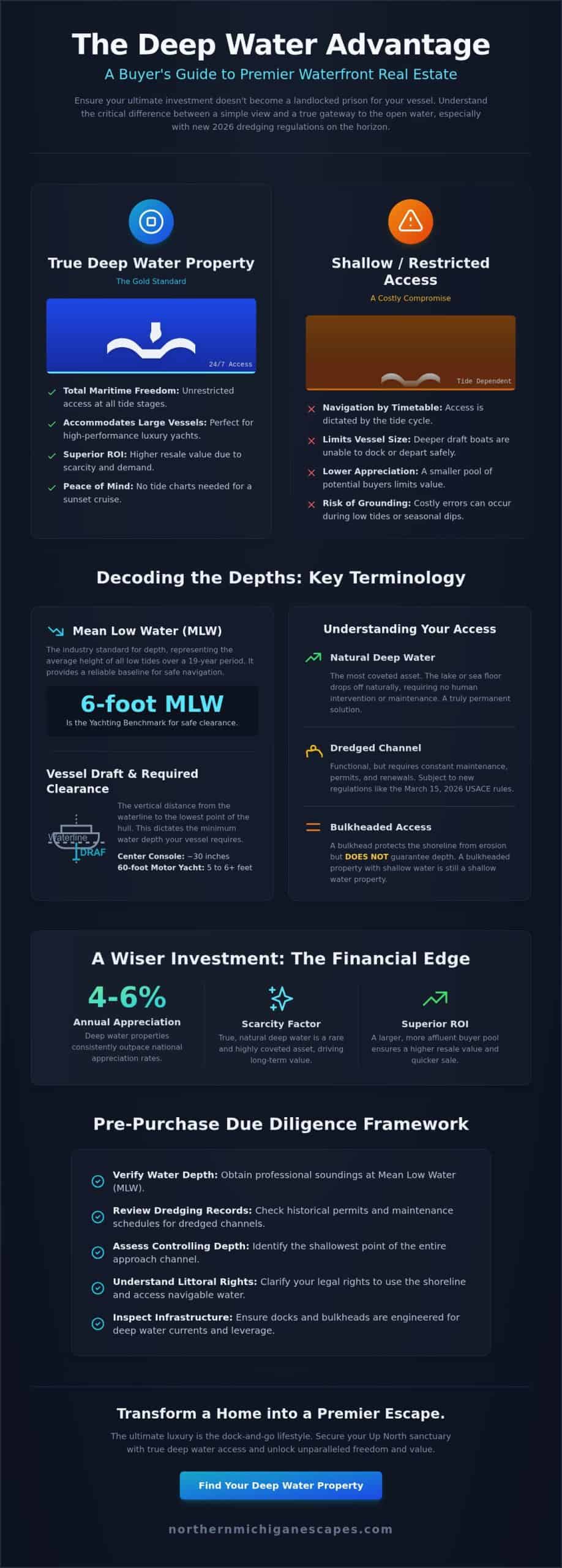
We promise to demystify these complexities so you can secure a curated escape that accommodates your vessel’s specific draft perfectly. With waterfront properties currently outpacing national appreciation rates at 4 to 6 percent annually, making the right choice is as much about financial wisdom as it is about lifestyle. This guide provides a clear roadmap through Mean Low Water requirements, the March 15, 2026 USACE dredging regulations, and the essential due diligence needed to ensure your next Up North sanctuary is truly navigable.
Key Takeaways
- Learn why true deep water access is the gold standard of waterfront real estate by ensuring your vessel remains navigable at all tide stages.
- Discover how to align your boat’s hull shape and draft with specific depth requirements to prevent costly navigation errors and groundings.
- Understand the scarcity factor that drives higher resale values and superior ROI for deep water estates compared to shallow water properties.
- Master a professional due diligence framework to verify water depth at Mean Low Water and review critical historical dredging records before you buy.
- Explore how a deep water property transforms a simple home into a premier Escape with the ultimate convenience of dock-and-go living.
Defining Deep Water: The Gold Standard of Waterfront Real Estate
Real estate professionals use the term deep water to describe a property where the water depth remains navigable through every tide cycle or seasonal fluctuation. It represents the pinnacle of waterfront living, especially as we move into 2026 and see a surge in demand for larger, high-performance luxury vessels. Unlike properties with seasonal access that might restrict your boating to the high-water months of early summer, a true deep water estate offers a year-round invitation to the open blue. It’s the difference between owning a home with a view and owning a home with a private gateway to the world.
The distinction between deep water and simple canal access is often found in the controlling depth of the approach. While a canal might look inviting, it often hides shallow shoals or narrow channels that trap larger boats during low tide. For owners of Lake Charlevoix vacation rentals and luxury estates, the freedom to depart at a moment’s notice is the ultimate amenity. It’s about the psychological peace that comes from knowing your backyard is a launchpad, not a barrier. You don’t want to check a tide chart before deciding to take your guests out for a sunset cruise.
To better understand how water access and infrastructure are evaluated, watch this helpful video:
Mean Low Water (MLW) and Its Critical Importance
In the maritime world, consistency is everything. Mean Low Water (MLW) serves as the industry standard for measuring depth, representing the average height of all low tides recorded at a specific location over a 19-year period. For serious yachting, a property boasting a 6-foot MLW is considered the benchmark. This depth ensures that even during a particularly low tide, your hull remains safely clear of the bottom. Understanding your Littoral rights is also essential, as these legal protections define how you can utilize the shoreline and maintain access to the navigable portion of the water. Without sufficient MLW, your premier getaway remains at the mercy of the moon’s cycle.
The Distinction Between Deep Water and Bulkheaded Access
Not all deep water is created equal. Some properties rely on a dredged channel that requires constant maintenance and permit renewals to remain functional. In contrast, natural deep water is a rare and coveted asset where the lake or sea floor drops away naturally without human intervention. While bulkheads are often necessary to protect the shoreline from erosion and provide a stable platform for your dock, they don’t guarantee depth. A bulkheaded property with shallow flats is still a shallow water property. The most valuable estates combine natural depth with a professionally engineered bulkhead to provide a seamless, worry-free connection between the land and the water, ensuring your Up North Escape is as functional as it is beautiful.
The Engineering of Access: Why Draft and Depth Dictate Your Boating Experience
A vessel’s draft is the vertical distance between the waterline and the lowest point of the hull. While a sleek center console might only draw 30 inches, a 60-foot motor yacht often requires 5 or 6 feet of clearance just to remain afloat. When you’re planning a waterfront property investment, the engineering of your dock must account for these specific measurements to avoid catastrophic groundings. A true deep water property provides the necessary vertical space, but the infrastructure must be robust enough to handle the increased leverage on longer dock pilings. These pilings must penetrate deep into the substrate to remain stable against the stronger currents often found in deeper channels.
Installing a dock in high-depth areas presents unique challenges that shallow-water neighbors simply don’t face. Heavy-duty barge-mounted pile drivers are usually required, and the materials must be rated for long-term immersion in high-flow environments. If you’re exploring Lake Charlevoix vacation rentals for your next summer Escape, you’ll notice that the most prestigious docks feature advanced fendering systems and heavy-duty cleats designed to secure larger vessels safely. Ensuring your dock is professionally engineered means you can enjoy your morning coffee without worrying about the integrity of your moorings during a sudden storm.
Calculating Your Vessel’s Requirements
The golden rule for safe dockage is the two-foot safety buffer. If your boat’s draft is 4 feet, you need at least 6 feet of water at Mean Low Water to ensure your engine’s cooling intakes don’t suck up bottom silt or sand. This debris can clog heat exchangers and cause thousands of dollars in engine damage within minutes. While center consoles are more forgiving, luxury motor yachts and sailboats with deep keels leave zero room for error. Always verify the manufacturer’s loaded draft specifications, as fuel, water, and guests can add several inches to your vessel’s profile.
Bathymetry and Underwater Topography
Understanding the floor of your basin is just as important as the depth at the piling. A hydrographic survey uses sonar to create a detailed map of the underwater topography, identifying “dead heads” or sunken timber that could pierce a hull. These surveys also reveal how sediment moves; a deep water berth can quickly become shallow if local currents deposit silt in a “dead zone” behind your bulkhead. In 2026, many savvy buyers are commissioning these surveys as part of their standard due diligence to ensure the long-term navigability of their private slip. If you need help evaluating a property’s technical specs, our team can provide the expert property services required to make an informed decision.
Investment Dynamics: Deep Water vs. Shallow Water Property Value
A deep water estate operates on the principle of extreme scarcity, acting as a robust hedge against market volatility. While standard residential homes often follow the broader economic cycles, properties with unrestricted maritime access occupy a unique niche where demand consistently outstrips supply. In 2026, the National Association of Realtors forecasts a steady 3 to 4 percent rise in national home prices, yet premier waterfront assets are expected to exceed this, reaching appreciation rates of 4 to 6 percent annually. This trend is driven by a limited coastline and an increasing number of luxury boat owners who require significant depth for their modern vessels.
The financial disparity between deep and shallow water is quantifiable and significant. For instance, the median sale price for ocean-access homes in luxury hubs reached $2,300,000 by late 2025, representing a nearly 18 percent increase from the previous year. Investors recognize that a deep water property isn’t just a home; it’s a specialized piece of infrastructure. When you own a lot that can accommodate a 60-foot yacht at any tide, you’re competing in a global market of high-net-worth individuals who view these properties as non-negotiable requirements for their lifestyle.
The Resale Premium of Deep Water
Resale data consistently shows that deep water properties command a premium of 20 to 30 percent over their shallow-water counterparts. International buyers, in particular, prioritize “true” deep water access because it eliminates the logistical headache of off-site berthing. To preserve this high valuation, savvy owners utilize professional property management and maintenance services to keep docks, bulkheads, and lifts in pristine condition. A well-maintained deep water berth is often the deciding factor that closes a multi-million dollar deal, ensuring your Escape remains a liquid asset in every sense of the word.
Permitting and Regulatory Hurdles
The complexity of securing new dock permits has reached a peak in 2026. The U.S. Army Corps of Engineers (USACE) implemented new Nationwide Permits on March 15, 2026, which will govern residential dredging and dock construction through 2031. These regulations make it increasingly difficult to modify existing shorelines, which adds immense value to properties that already possess permitted, deep-water infrastructure. Understanding your riparian rights is essential, as these legal protections vary by state and dictate your ability to maintain your water access. In this regulatory climate, a “turnkey” dock is one of the most valuable features a property can offer.
Navigating the Purchase: A Due Diligence Framework for Deep Water Access
Securing a premier estate with deep water access requires a level of technical scrutiny that goes far beyond a standard home inspection. You aren’t just buying a residence; you’re acquiring a piece of maritime infrastructure. Your first step should always be a personal verification of the depth at Mean Low Water. Don’t rely on old charts or hearsay from a listing agent. Bring a lead line or a portable depth sounder to confirm that the basin meets your vessel’s requirements during the lowest tide of the month. This hands-on approach ensures your boat won’t be grounded by a hidden sandbar that appeared after the last storm.
Reviewing historical dredging records is equally critical for long-term peace of mind. These documents reveal whether a channel naturally maintains its depth or if it’s a “silt trap” that requires frequent, expensive maintenance. With the U.S. Army Corps of Engineers implementing new permitting rules on March 15, 2026, understanding the regulatory history of your slip is vital. You should also assess the dock’s structural integrity specifically for large vessel mooring. A piling that holds a jet ski won’t withstand the massive lateral force of a 60-foot yacht in a 25-knot crosswind. Consult a maritime attorney to verify your riparian rights and ensure no local ordinances or neighbor agreements restrict your ability to dock a larger craft.
The Turning Basin: More Than Just Depth
Navigation is about more than just what’s beneath your keel; it’s about the room you have to maneuver. A turning basin is the underwater equivalent of a driveway, and for a 50-foot vessel, you typically need a width at least 1.5 times the boat’s length to turn safely. Identify any neighbor dock extensions or boat lifts that might encroach on the navigable channel. These “invisible” barriers can turn a simple docking maneuver into a high-stress event during a heavy current. If you’re evaluating properties for your next Escape, ensure the approach width is sufficient for your specific hull design.
Infrastructure Requirements for Deep Water Docks
Modern luxury vessels are incredibly power-hungry, meaning your dock needs the electrical “muscle” to match. While a 30-amp pedestal is fine for a small cruiser, a serious motor yacht often requires 50-amp or even dual 100-amp service to keep climate control and onboard systems running. Look for high-grade pilings and mooring whips that keep the hull safely away from the dock edge. Freshwater access for washdowns and professional-grade dock lighting are also non-negotiable for safe night navigation. If you need help identifying a property that meets these rigorous standards, our team provides expert property services to guide your search.
Ready to secure your own piece of the shoreline? Explore our Lake Charlevoix vacation rentals to experience the convenience of deep water living firsthand.
The Deep Water Lifestyle: Crafting Your Ultimate Luxury Escape
Transitioning to a deep water estate is about more than just technical depth; it’s about a fundamental shift in how you experience the shoreline. In 2026, the modern luxury escape isn’t defined solely by the square footage of the living room, but by the seamless connection between the terrace and the transom. This “dock-and-go” lifestyle removes the logistical friction that often plagues waterfront living. You don’t have to worry about the 6-foot MLW requirements discussed earlier or wait for a specific tide window. Instead, you can decide to cruise at a moment’s notice, turning a quiet morning into a spontaneous adventure on the open blue.
Your yacht effectively becomes an extension of your home. It’s a floating guest suite, a private dining room, and a mobile viewing platform for the breathtaking sunsets of Charlevoix or Petoskey. When hosting, the transition from a poolside cocktail to a moonlight cruise is effortless. This integration allows you to provide an unparalleled level of hospitality where guest amenities extend past the shoreline. By treating the dock as a primary living space, you create a curated environment that celebrates the maritime heritage of the region while offering every modern comfort.
Curating the Waterfront Experience
Maintaining this level of luxury requires meticulous attention to detail. Professional property management ensures that your dock remains in top condition, from the tension of the mooring lines to the reliability of the power pedestals. Many owners choose to start their journey by exploring a diverse portfolio of luxury vacation rentals to understand which amenities matter most before they commit to a permanent purchase. Concierge services can handle everything from provisioning your vessel with local delicacies to scheduling routine hull cleanings, ensuring your time Up North is entirely dedicated to relaxation and leisure.
Beyond the Dock: The 2026 Luxury Standard
The 2026 luxury standard now includes smart home technology that extends directly to the water’s edge. You can control your deep water dock lighting, security cameras, and boat lift from a single interface on your phone. Sustainable living has also become a priority, with solar-powered pedestals and eco-friendly pilings that protect the local ecosystem while supporting your maritime ambitions. While some prefer the rustic charm described in the ultimate guide to cabins in northern michigan, the deep water lifestyle offers a sophisticated alternative for those who demand both high-performance access and premier comfort in a single, worry-free package.
Securing Your Legacy on the Open Blue
Navigating the complexities of waterfront real estate requires a blend of technical precision and local insight. By prioritizing the 6-foot Mean Low Water benchmark and understanding the March 15, 2026 USACE permit regulations, you protect both your vessel and your investment’s 4 to 6 percent projected annual appreciation. A true deep water estate is more than a luxury; it’s a strategic asset that ensures your maritime freedom remains unrestricted for decades to come. Whether you’re seeking a seasonal sanctuary or a permanent residence, the right infrastructure is the foundation of every great Escape.
At Northern Michigan Escapes, we offer a specialized real estate brokerage for luxury estates alongside 24/7 support for seamless waterfront stays. Our expertise in high-end property maintenance and ROI maximization ensures that your shoreline investment remains as pristine as the day you purchased it. We invite you to explore our premier waterfront property and management services to begin your next chapter Up North. Your perfect horizon is waiting, and we’re here to help you reach it with confidence.
Frequently Asked Questions
What is the minimum depth required for a deep water property?
A depth of 6 feet at Mean Low Water is the industry benchmark for a property to be classified as deep water for luxury motor yachts. While smaller center consoles only need 2 to 3 feet, larger vessels require this deeper clearance to protect engine cooling systems from sucking up bottom debris. Always check your specific vessel’s loaded draft and add a 2-foot safety buffer to determine your personal requirements.
How does Mean Low Water (MLW) affect my boat dock?
Mean Low Water represents the average height of all low tides at a location over a 19-year period, serving as your “guaranteed” depth. It’s the most critical measurement for your dock because it dictates whether your boat stays afloat or gets stuck in the mud during a low tide cycle. If a listing claims a 5-foot depth but doesn’t specify MLW, you might find yourself landlocked for several hours each day.
Can I dredge my own waterfront to create deep water access?
You can dredge your waterfront, but it requires strict adherence to the U.S. Army Corps of Engineers Nationwide Permits that went into effect on March 15, 2026. Specifically, Nationwide Permit 19 authorizes minor residential dredging of up to 25 cubic yards. In 2026, costs for these projects range from $20 to over $300 per cubic yard depending on whether you’re removing clean sand or complex muck and rock.
Do deep water properties have higher property taxes?
Properties with deep water access generally carry higher tax assessments because their market value is significantly higher than landlocked or shallow-water homes. Since these estates often command a 20 to 30 percent price premium, the local municipality reflects this scarcity in the annual tax bill. While the carrying cost is higher, the superior appreciation rate of 4 to 6 percent annually often offsets the additional tax burden.
What are riparian rights in the context of deep water?
Riparian rights are the legal protections that grant a property owner access to and use of the water bordering their land. In a deep water context, these rights are what allow you to build a dock, install a boat lift, and maintain a navigable path to the main channel. These rights are not absolute and are subject to state laws and environmental regulations, making it essential to verify them during your due diligence process.
Is a hydrographic survey necessary before buying a waterfront home?
Commissioning a hydrographic survey is a vital step for any serious buyer to identify “dead heads” or hidden underwater obstructions. These surveys use sonar to map the bathymetry around your dock, ensuring there aren’t any sudden shoals that nautical charts might have missed. It’s a small investment that prevents the catastrophic expense of hull damage or the discovery that your deep water channel is actually a silt trap.
What kind of maintenance does a deep water dock require?
Maintaining a deep water dock involves regular piling inspections and monitoring your seawall for signs of erosion or structural fatigue. In 2026, seawall repairs typically cost between $100 and $250 per linear foot, though extensive damage can reach $600 per foot. Keeping your electrical pedestals and freshwater lines in top condition is also necessary to support the high-power requirements of modern luxury yachts and ensure a worry-free Escape.
How does deep water access affect the resale value of a home?
Deep water access is one of the strongest drivers of resale value, often resulting in a 20 to 30 percent premium over nearby shallow-water lots. Data from 2025 showed that ocean-access homes in premier markets saw a 17.9 percent price increase in a single year. Because the supply of naturally deep lots is finite, these properties remain highly liquid assets that attract international buyers and serious yachting enthusiasts regardless of broader market shifts.