What if the crisp breeze off Lake Charlevoix and the golden sunsets of Petoskey weren’t just for a fleeting week of vacation, but a permanent part of your legacy? You’ve likely spent quiet evenings imagining a retreat in Harbor Springs or Boyne City, only to feel a twinge of hesitation when considering the financial logistics. It’s natural to feel a bit of weight from the uncertainty surrounding higher interest rates for secondary residences or the perceived challenge of managing two mortgages at once.
While navigating these requirements is essential in Michigan, those exploring similar resort opportunities in the Southeast can look to The Mountain Life Real Estate Team for specialized guidance on mountain cabins and luxury properties in Georgia and North Carolina.
We’re here to help you understand how to finance a second home purchase with confidence by providing a clear roadmap tailored to the unique landscape of Northern Michigan. You’ll discover the most effective financing strategies for 2026, including details on the $832,750 jumbo loan threshold and how a 10% down payment can still secure your slice of paradise. This guide explores the latest lending requirements and previews how rental income in destinations like Traverse City or East Jordan can offset your costs, ensuring your investment provides both personal relaxation and steady financial performance.
Key Takeaways
- Learn why a credit score of 720 or higher is the benchmark for 2026 and how to finance a second home purchase using conventional loans or equity from your primary residence.
- Understand the crucial legal distinctions between a second home and an investment property, including the 14-day personal use rule that impacts your mortgage terms and tax status.
- Discover how professional property management can help you maximize rental yield and offset mortgage costs in high-demand destinations like Traverse City and Harbor Springs.
- Gain a competitive edge by working with local experts who navigate Northern Michigan’s unique appraisal standards and identify warrantable resort condos in Boyne Mountain.
- Identify the financial nuances of purchasing in Charlevoix and Emmett Counties, from specific debt-to-income requirements to navigating local short-term rental regulations.
Defining the Second Home: Financing vs. Investment Properties in 2026
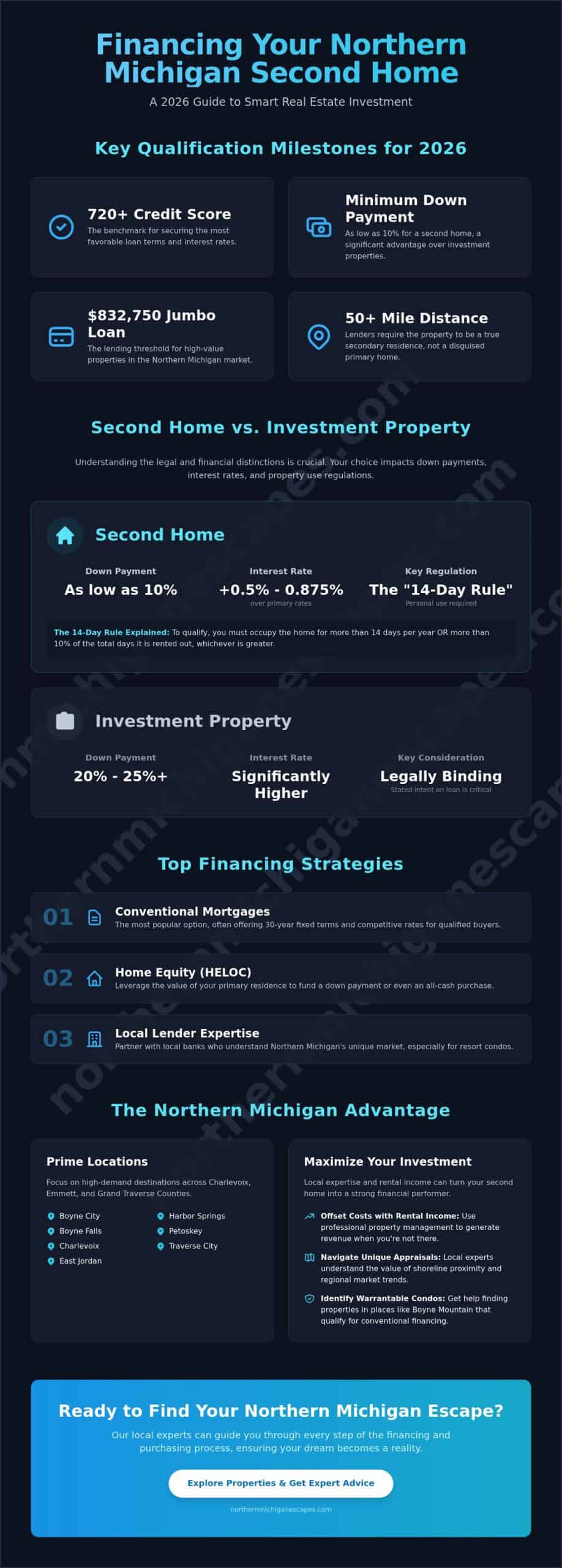
Understanding the nuances of property classification is the first step toward securing your retreat in Harbor Springs or Petoskey. When you begin exploring how to finance a second home purchase, you’ll find that lenders draw a firm line between a vacation getaway and a pure business asset. In 2026, a second home is defined as a property you intend to occupy for some portion of the year, typically located at least 50 miles away from your primary residence. This geographic buffer assures the bank that the home is a legitimate secondary residence rather than a primary home purchased under different terms.
Lenders view these properties with a bit more scrutiny because they represent a higher risk profile than your main residence. If a financial challenge arises, most homeowners prioritize their primary roof over a lakeside cottage in East Jordan. Consequently, securing a second mortgage usually requires a higher credit score and an interest rate that is often 50 to 87.5 basis points higher than a primary residence loan.
To better understand these mortgage nuances, watch this helpful video:
The ’14-day rule’ remains a critical benchmark for 2026. To qualify for second home financing, you must live in the property for more than 14 days a year or 10% of the total days it’s rented out, whichever is greater. This balance allows you to enjoy the charm of Traverse City while still exploring the potential of full-service property management to help offset ownership costs. If you don’t meet these occupancy requirements, the lender will likely reclassify the loan as an investment property, which changes your financial obligations significantly.
Second Home vs. Investment Property
The choice between these two classifications impacts your wallet immediately. Interest rate spreads for second homes in Michigan currently sit just above primary rates, while investment properties can climb much higher. You can often start with a 10% down payment for a vacation home, but an investment property almost always demands 20% to 25%. Your stated intent on the loan application is legally binding. Claiming a property is for personal use when you plan to rent it 365 days a year is a risk that can lead to serious legal complications.
Why Northern Michigan Enclaves Require Specific Classifications
In enclaves like Boyne City or Harbor Springs, the unique nature of the local market can influence your appraisal. Proximity to the shoreline of Lake Charlevoix adds immense value, but it also requires a lender who understands the seasonal ebbs and flows of our region. Some resort properties in areas like Boyne Falls might be classified as ‘condotels’ if they have shared check-in desks or certain amenities. This classification often limits your options to specific local lenders who are familiar with the area’s resort economy rather than national banks that might shy away from such specialized assets.
Top 5 Strategies to Finance Your Northern Michigan Purchase
Choosing the right path to ownership is just as important as finding the perfect view of Grand Traverse Bay. You have several sophisticated options when determining how to finance a second home purchase, ranging from traditional bank products to more creative equity plays. Each strategy carries its own set of advantages, whether you’re eyeing a ski-in/ski-out condo in Boyne Falls or a historic cottage in Harbor Springs. Understanding the qualification requirements for a second mortgage is essential before you commit to a specific direction.
- Conventional Mortgages: These remain the most popular choice, offering 30-year fixed terms with down payments as low as 10% for qualified buyers in 2026.
- Home Equity Line of Credit (HELOC): Many owners tap into the built-up value of their primary residence to cover the down payment or the entire purchase price of their Northern Michigan retreat.
- Cash-Out Refinance: This involves replacing your current primary mortgage with a larger one, taking the difference in cash to fund your new acquisition in Petoskey.
- Jumbo Loans: For high-value estates that exceed standard lending limits, these specialized loans provide the necessary capital for premier waterfront living.
- Asset-Based Lending: High-net-worth individuals may choose to leverage their investment portfolios rather than traditional income to secure a property quickly.
Leveraging Primary Home Equity
Using a HELOC allows you to access cash quickly without disturbing your existing primary mortgage rate. It’s a flexible tool, but it does mean placing your main home up as additional collateral, which is a risk that requires careful consideration. For some, a piggyback loan strategy is a smart move in 2026. This is where you take out a second mortgage on your primary home to reach a 20% down payment on the new property, effectively avoiding private mortgage insurance. If you’re considering this route for Lake Charlevoix vacation rentals, it’s wise to weigh the immediate liquidity against the long-term debt load.
Jumbo Loans for Waterfront Properties
In 2026, the conforming loan limit for a single-unit property in all Michigan counties is $832,750. Any amount borrowed above this threshold is considered a jumbo loan. Because many premier homes on Walloon Lake or in the enclaves of Traverse City exceed this price point, you should prepare for stricter reserve requirements. Lenders often ask for 12 months of cash reserves to ensure you can manage the higher debt. These loans are vital for the luxury market, where the emotional allure of the water meets the reality of high-end real estate values.
Exploring these financial avenues is the first step toward your Up North lifestyle. If you’re ready to see how these strategies translate into real ownership opportunities, our team can help you navigate real estate sales and acquisitions with local precision.
Qualification Requirements for a Second Mortgage
Securing your sanctuary in Harbor Springs or a lakeside retreat in East Jordan requires more than just a vision of summer sunsets. As you research how to finance a second home purchase in 2026, you’ll find that lenders have elevated their standards to ensure stability in the resort market. While a credit score of 620 might have opened doors in the past, a score of 720 or higher has become the gold standard for those seeking the most competitive rates. With Michigan’s 30-year fixed mortgage rates hovering around 6.56% for primary residences, maintaining a pristine credit profile is the best way to minimize the typical 50 to 87.5 basis point premium charged for secondary homes.
The down payment landscape has also shifted toward a more conservative stance. Although some conventional programs allow for 10% down, many lenders now prefer a 20% equity stake to bypass private mortgage insurance and secure favorable terms. This is particularly true for high-value acquisitions in Traverse City or Petoskey, where larger loans demand a greater show of financial commitment. Demonstrating this level of liquidity proves to the lender that you’re a low-risk borrower capable of managing the unique responsibilities of a vacation property.
The DTI Challenge
Your debt-to-income (DTI) ratio is the primary lens through which lenders view your ability to carry two mortgages simultaneously. When calculating this figure, you must factor in the principal, interest, and the 1.25% average effective property tax rate in Michigan for both locations. Lenders generally look for a DTI under 43%, though some may stretch to 50% if you have significant cash reserves. Understanding the nuances of Financing vs. Investment Properties is vital here, as your intended use of the home in Charlevoix County will dictate which income streams can be used to qualify. Paying down recurring debts like car loans or credit cards before applying can provide the necessary breathing room for approval.
Proving Liquid Reserves
Lenders want to see that a sudden repair in Boyne Falls or a quiet rental season won’t jeopardize your financial health. The six-month reserve rule is standard for 2026, requiring you to have at least half a year’s worth of mortgage payments, taxes, and insurance tucked away in liquid accounts. This includes savings, brokerage accounts, and even a portion of your 401k. Northern Michigan’s seasonal rhythm makes these reserves even more critical; having a financial cushion ensures peace of mind during the snowy months when your focus is on the slopes of Boyne Mountain rather than the bottom line.
Offsetting Your Mortgage with Vacation Rental Income
The dream of owning a waterfront escape in Charlevoix or a downtown suite in Traverse City often becomes more attainable when you view the property as a performing asset. While exploring how to finance a second home purchase, many buyers find that the financial equation shifts favorably once they account for the region’s strong vacation rental demand. In Grand Traverse and Charlevoix Counties, the ROI potential is bolstered by a steady stream of visitors seeking the refined luxury of the Great Lakes. By strategically renting your home during peak seasons, you can generate significant revenue to cover your monthly principal and interest payments.
Tax advantages provide another layer of financial relief for homeowners in 2026. The IRS allows you to deduct mortgage interest and property taxes, which helps mitigate the impact of the 1.25% effective tax rate common in Michigan. One of the most attractive incentives is the ’14-day rule,’ which allows you to rent your property for up to two weeks per year without having to report that income on your federal tax return. This tax-free windfall is perfect for owners who want to offer their home during high-traffic events like the National Cherry Festival while keeping the rest of the season for personal use.
Maximizing ROI with Professional Management
Achieving a premium rental yield requires more than just a listing on a national site. Professional management ensures your property in Harbor Springs or Boyne Falls maintains high occupancy through sophisticated marketing and dynamic pricing strategies. Guests today expect 24/7 support and meticulous upkeep; these are services that allow you to command higher nightly rates compared to self-managed listings. Learn how our property services protect your investment while you enjoy the peace of mind that comes with expert oversight.
Tax Considerations for 2026
Navigating the fiscal responsibilities of a second home requires a clear understanding of how income is classified. If you’re an active participant in the management of your rental, you may be able to deduct expenses like professional housekeeping services, property maintenance, and even travel costs for site visits. It’s vital to remember the 6% statewide Use Tax that applies to all short-term rentals in Michigan. Partnering with a local CPA who understands the specific resort tax landscape in Petoskey or East Jordan ensures you maximize your deductions while staying compliant with evolving local regulations.
If you’re ready to transform your vision of a Northern Michigan retreat into a sustainable financial reality, our team is here to guide you through every step of full-service property management.
Navigating the Northern Michigan Market with Local Experts
Success in the Northern Michigan market often depends on the company you keep. When you’re determining how to finance a second home purchase, a national lender in a different time zone might struggle to understand why a specific cottage in Harbor Springs commands such a premium. Local lenders, however, are intimately familiar with the nuances of our regional enclaves. They understand that a property in Boyne City isn’t just a house; it’s a gateway to Lake Charlevoix. This local perspective is crucial for accurate appraisals and smoother underwriting, as these professionals already appreciate the intrinsic value of our unique geography and the year-round appeal of our resort communities.
Building your ‘Up North’ team is the final, most critical step in your journey. This group should include a specialized real estate broker, a lender familiar with resort-area quirks, and a property manager who understands the 2026 regulatory landscape. In cities like Traverse City, Petoskey, and Charlevoix, local governments have implemented specific licensing requirements and zoning rules that can affect your property’s long-term value. Having experts who know which townships are short-term rental friendly and which have permit caps ensures your financial roadmap remains on solid ground.
Resort-Specific Property Nuances
Financing a ski-in/ski-out condo in Boyne Falls presents different challenges than a detached home in East Jordan. Many resort properties are classified as non-warrantable by national standards due to high concentrations of short-term rentals or specific hotel-like amenities. Before you commit to a specific floor plan, explore Boyne Mountain vacation rentals for market research to see how these units perform in the real world. You’ll also want to scrutinize HOA documents early in the process. High levels of commercial space or specific rental pool requirements can steer you toward specialized portfolio lenders who specialize in resort assets rather than traditional conforming loans.
The Northern Michigan Escapes Advantage
We believe that the most successful investments are born from a blend of local passion and financial precision. Our team bridges the gap between real estate sales and acquisitions and full-service property management, offering you a seamless transition from buyer to host. We help you identify properties with the strongest financing-to-revenue ratio, ensuring your retreat in Traverse City or East Jordan is as rewarding as it is relaxing. By consolidating your acquisition and management needs under one roof, you gain the quiet reassurance of a partner who is as invested in the small details as you are in the grand experience. Contact us today to start your second home journey and let us guide you home to the beauty of Northern Michigan.
Secure Your Legacy in Northern Michigan
Your journey toward owning a piece of the Great Lakes lifestyle is closer than you think. By mastering the 2026 lending landscape and identifying the right balance between personal use and rental performance, you’ve already laid the groundwork for a successful investment. You now understand the power of local appraisals in Harbor Springs and the strategic advantage of navigating jumbo loan thresholds in Traverse City. Learning how to finance a second home purchase is simply the first chapter in a much larger story of lakeside memories and winter retreats.
With over 20 years of local expertise and more than 250 managed properties, our specialized real estate brokerage understands the rhythm of this region like no one else. We combine professional property management with deep market insights to ensure your acquisition in Petoskey or Boyne City thrives for years to come. Start your Northern Michigan property search today and take the first step toward a future filled with golden sunsets and crisp morning air. Your dream retreat is waiting, and we’re honored to help you find it.
Frequently Asked Questions
Can I use rental income to qualify for a second home mortgage?
You generally can’t use projected rental income to qualify for a second home mortgage. Lenders require your debt-to-income ratio to remain stable using only your current verified earnings. If you rely on future rent from a Petoskey property to meet qualification standards, the loan will likely be reclassified as an investment property mortgage with different terms.
What is the minimum down payment for a second home in Michigan in 2026?
The minimum down payment for a second home in Michigan is typically 10% for conventional financing. However, many buyers in 2026 opt for 20% to avoid the added cost of private mortgage insurance. For luxury estates in Traverse City that exceed the $832,750 jumbo loan limit, you should prepare for a down payment of 20% to 25%.
Are interest rates higher for second homes than primary residences?
Yes, interest rates for second homes are usually higher than those for primary residences. You can expect to pay a premium of 50 to 87.5 basis points above standard market rates. This reflects the higher risk lenders associate with secondary properties in resort areas like Harbor Springs, where the home isn’t your main residence.
Is it harder to get a mortgage for a condo in Boyne Mountain?
Financing a condo at Boyne Mountain can be more complex due to non-warrantable status. Many of these units have resort-style amenities that national banks find difficult to categorize. Working with a local specialist who understands how to finance a second home purchase in a resort setting is the best way to navigate these specific HOA requirements.
What are the tax implications of owning a second home in Northern Michigan?
Owning a second home in Charlevoix or Emmett County means you won’t qualify for the Michigan Principal Residence Exemption. This results in an additional 18-mill tax for local schools that primary homeowners don’t pay. Additionally, if you rent the property for more than 14 days, you’ll need to account for the 6% statewide Use Tax on short-term stays.
Do I need a local Michigan lender to finance my purchase?
You don’t strictly need a local lender, but it’s a significant advantage in our region. Local professionals in Boyne City and East Jordan understand the nuances of waterfront appraisals and seasonal market shifts. They can often provide more flexible terms for unique properties that national institutions might overlook during the underwriting process.
What is the 50-mile rule for second home financing?
The 50-mile rule is a common lender guideline requiring your second home to be at least 50 miles away from your primary residence. This distance helps prove to the bank that the home is a legitimate vacation retreat rather than a second primary residence. It’s a key factor in securing the more favorable interest rates reserved for secondary homes.
Can I buy a second home with an FHA or VA loan?
No, you can’t use FHA or VA loans to purchase a second home. These government-backed programs are exclusively reserved for primary residences where you intend to live year-round. For a vacation property in Traverse City or a cottage in East Jordan, you’ll need to explore conventional, jumbo, or portfolio loan options instead.